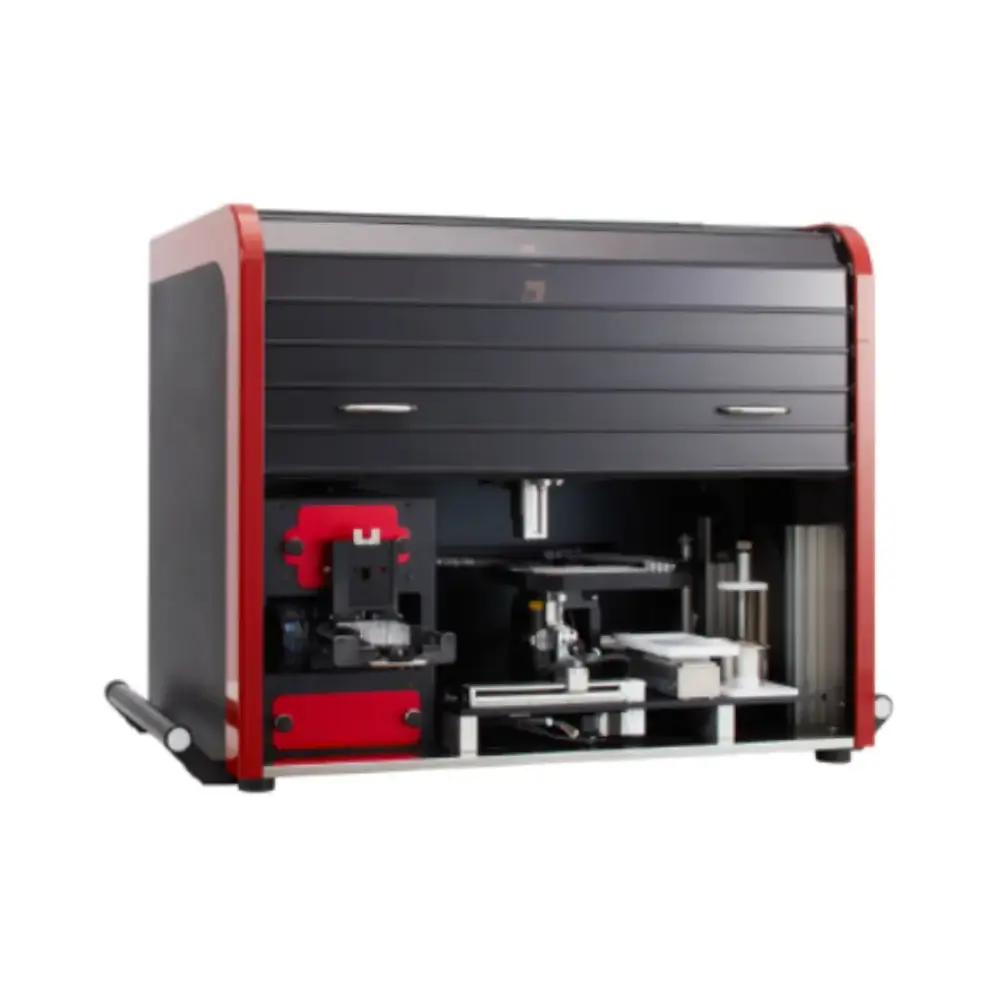
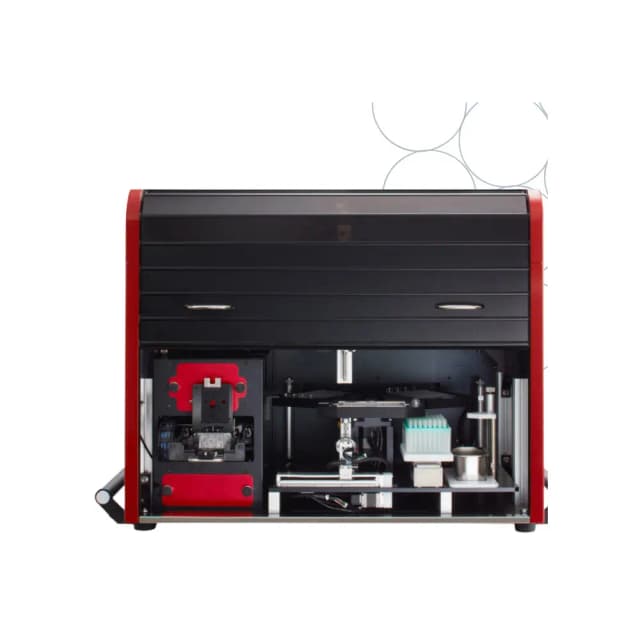
The Yamato IOTA-20010 is the isoPick automated single-cell picker, designed to gently isolate and transfer individual cells while preserving viability. It automatically dispenses cells into GRID chambers, then flexibly transfers selected single cells into a range of downstream formats: 96-well plates, PCR tubes, and vials for mass spectrometry. With optional temperature control and ultra-gentle handling of sensitive cells, isoPick keeps cells alive through the isolation and transfer steps, which is precisely where harsher methods lose them.
Key Specifications
| SKU | IOTA-20010 |
| Product | isoPick automated single-cell picker |
| Isolation method | Gently dispenses cells into GRID chambers, then transfers selected single cells |
| Output formats | 96-well plates, PCR tubes, vials for mass spectrometry |
| Cell handling | Ultra-gentle (optimized for high cell viability) |
| Temperature control | Optional |
| Companion instrument | isoHub (IOTA-10060): wireless verification/navigation |
Application Profile
Single-cell isolation is the foundation of clonal cell-line development and single-cell omics, and its hardest requirement is getting exactly one viable cell into a defined destination without damaging it. Traditional approaches like FACS-based single-cell sorting or limiting dilution can be harsh on cells or statistically imprecise; both cost you viable clones. isoPick takes a gentler route: it dispenses cells into GRID chambers where individual cells can be identified, then transfers the chosen single cells to the destination format. The ultra-gentle handling is the design goal throughout, because a monoclonal workflow that kills the cell it just isolated has accomplished nothing.
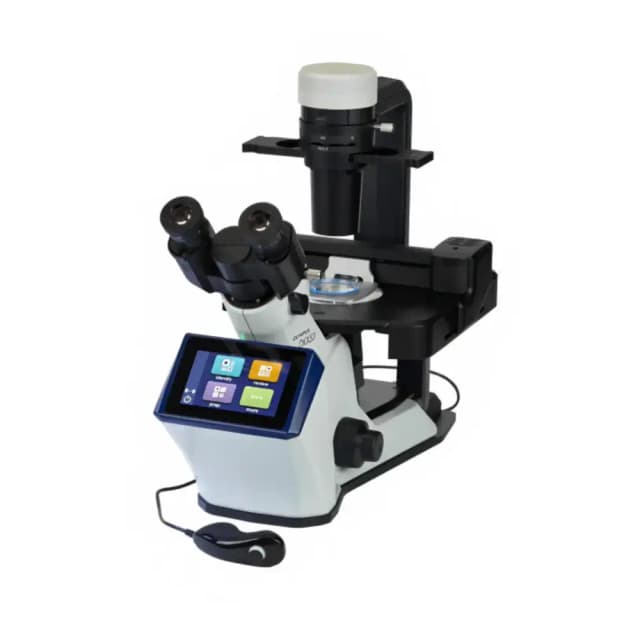
The flexibility of output formats is what makes it a shared platform: the same instrument feeds 96-well plates for cell-line development, PCR tubes for single-cell genomics, and vials for mass spectrometry for single-cell proteomics. Optional temperature control extends that to sensitive cell types that need environmental stability during picking. In practice isoPick pairs with the isoHub imaging system, which verifies monoclonality and navigates the GRID, the two communicate wirelessly to make the pick-and-verify loop seamless.
Frequently Asked Questions
What does the isoPick do? It automatically isolates and transfers single cells, dispensing cells gently into GRID chambers, then moving selected single cells into your chosen downstream format.
What output formats can it transfer cells into? 96-well plates, PCR tubes, and vials for mass spectrometry, so it serves cell-line development, single-cell genomics, and single-cell proteomics from one instrument.
How does it protect cell viability? Through ultra-gentle handling of sensitive cells, with optional temperature control for cell types that need environmental stability during isolation.
How is monoclonality verified? isoPick works with the isoHub (IOTA-10060) imaging system, which images the GRID chambers to confirm single cells; the two communicate wirelessly.
What workflows is it built for? Clonal cell-line development, single-cell genomics, and single-cell proteomics, anywhere a viable, verified single cell must reach a defined destination.
Do I need the isoHub too? isoPick performs the picking; the isoHub adds automated imaging and monoclonality verification. Many labs deploy them together for a complete pick-and-verify workflow.
Ordering & Configuration
Confirm at quote: whether you need the optional temperature control, which output formats (plates/PCR tubes/MS vials) you'll use, and whether to pair with the isoHub for verification.
Warranty: Per Yamato standard capital-equipment terms. Confirm coverage at quote.
Add to a quote to lock configuration and lead time.
Single-cell isolation pair:
- isoPick: IOTA-20010 (this product): gently isolates and transfers single cells into plates, PCR tubes, or MS vials.
- isoHub, IOTA-10060, automated imaging that verifies monoclonality and navigates the GRID.
Choose isoPick for the isolation/transfer step; add the isoHub when you need documented monoclonality verification and GRID navigation. Together they form a seamless, wireless pick-and-verify workflow.