
Buyer's Guide
Life Science Equipment
A complete procurement guide for molecular biology, cell biology, and genomics equipment, from centrifuges and thermal cyclers to pipettes and microplate readers.
Understanding Life Science Equipment
Life science equipment forms the core of molecular biology, cell biology, genomics, and proteomics workflows. From the centrifuges that separate your samples to the thermal cyclers that amplify DNA and the microplate readers that detect your assay results, each instrument plays a critical role in experimental success.
This guide covers eight major equipment categories used across research, clinical, pharmaceutical, and academic laboratories. For each type, we explain the technology, key specifications to evaluate, and common applications to help you match the right instrument to your workflow and budget.
Legacy Lab Supplies is an authorized distributor for leading life science brands including Benchmark Scientific. All equipment carries full manufacturer warranty and our competitive pricing.
Centrifuges
Centrifuges separate substances by density using rapid rotation. Available as microcentrifuges for small-volume molecular biology work, benchtop models for clinical and research applications, and floor-standing units for high-capacity processing. Refrigerated versions maintain sample temperature during separation.
Speed Range
1,000 to 21,000+ RPM
RCF Range
Up to 30,000+ × g
Capacity
0.2 mL tubes to 750 mL bottles
Temperature
Ambient or -20°C to +40°C (refrigerated)
Common Applications
- DNA/RNA extraction & pelleting
- Cell harvesting
- Blood fractionation
- Protein purification
Homogenizers & Cell Lysis Systems
Homogenizers break down tissue, cells, and other biological materials for downstream analysis. Options include bead-beating systems, rotor-stator homogenizers, ultrasonic processors, and mechanical disruptors. Selection depends on sample type, throughput, and the level of disruption required.
Method
Bead-beating, rotor-stator, ultrasonic, mechanical
Sample Volume
0.1 mL to 50+ mL per tube
Throughput
1 to 96 samples per run
Speed/Frequency
Up to 30,000 RPM or 40 kHz
Common Applications
- Tissue disruption
- Cell lysis for DNA/RNA extraction
- Protein extraction
- Pathogen detection sample prep
Gel Electrophoresis Systems
Gel electrophoresis separates DNA, RNA, or proteins by size using an electric field through an agarose or polyacrylamide gel matrix. Systems include horizontal (agarose) for nucleic acids and vertical (PAGE) for proteins. Imaging and documentation systems capture and analyze results.
Gel Type
Agarose (horizontal) or PAGE (vertical)
Sample Capacity
8 to 96+ wells per gel
Voltage Range
10V to 300V
Run Time
20 minutes to 4+ hours
Common Applications
- DNA fragment sizing
- PCR product verification
- RNA quality assessment
- Protein molecular weight determination
Microplate Readers
Microplate readers detect and quantify biological, chemical, or physical events in microplate wells. Detection modes include absorbance (colorimetric assays), fluorescence intensity, luminescence, and time-resolved fluorescence. Multimode readers combine two or more detection modes in one instrument.
Detection Modes
Absorbance, fluorescence, luminescence
Plate Formats
6-well to 384-well
Wavelength Range
200 nm to 1000+ nm
Read Speed
96-well plate in <10 seconds (absorbance)
Common Applications
- ELISA & immunoassays
- Cell viability & proliferation
- Enzyme kinetics
- Reporter gene assays
Pipettes & Pipetting Systems
Pipettes are essential liquid handling tools for precise volume transfer in any laboratory. Options range from manual single-channel and multichannel pipettes to electronic and automated systems. Proper pipette selection, calibration, and tip compatibility directly impact experimental accuracy and reproducibility.
Volume Range
0.1 µL to 10,000 µL
Channels
Single, 8-channel, 12-channel
Type
Manual, electronic, or automated
Accuracy
±0.5% to ±3% (volume dependent)
Common Applications
- PCR setup & molecular cloning
- Cell culture media preparation
- Serial dilutions
- Microplate loading
Thermal Cyclers (PCR)
Thermal cyclers perform polymerase chain reaction (PCR) by cycling samples through precise denaturation, annealing, and extension temperatures. Standard endpoint models run reactions for post-run analysis, while real-time (qPCR) systems monitor amplification in real time with fluorescent detection.
Block Capacity
24 to 384 wells
Temperature Range
4°C to 99°C
Ramp Rate
1°C/sec to 6+°C/sec
Gradient
Fixed or gradient-capable
Common Applications
- Gene amplification
- Genotyping
- Cloning & sequencing prep
- Pathogen detection
Laboratory Aspirators
Aspirators remove supernatants, wash buffers, and media from microplates, tubes, and flasks. Vacuum-based systems connect to house vacuum or pump, while handheld aspirators provide portable convenience. Multichannel aspirators dramatically speed up plate washing in ELISA and cell culture workflows.
Channels
1 to 96
Vacuum Source
Built-in pump or house vacuum
Flow Control
Adjustable vacuum level
Waste Collection
1L to 4L bottles
Common Applications
- ELISA plate washing
- Cell culture media removal
- Supernatant aspiration
- Microplate cleanup
Automated Purification Systems
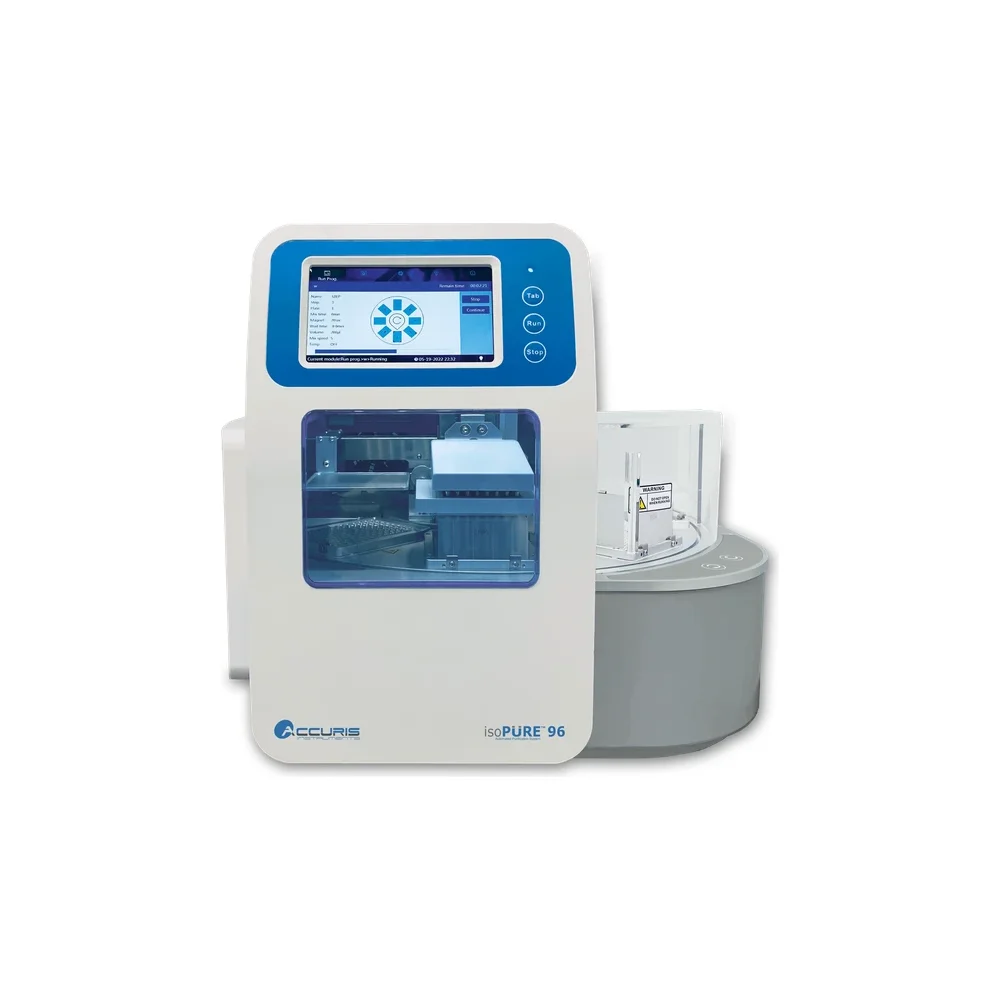
Automated purification systems use magnetic bead-based or column-based methods to extract and purify nucleic acids, proteins, or other biomolecules with minimal manual intervention. They reduce hands-on time, improve reproducibility, and scale from low to high throughput for research and clinical laboratories.
Method
Magnetic bead or column-based
Throughput
1 to 96 samples per run
Sample Types
Blood, tissue, cells, FFPE, swabs
Run Time
15 to 60 minutes per batch
Common Applications
- DNA/RNA extraction
- Forensic sample processing
- Clinical diagnostics prep
- Next-generation sequencing prep
How to Choose: Life Science Equipment Comparison
Compare key factors across the four most common equipment categories to guide your purchasing decision.
| Factor | Centrifuge | Thermal Cycler | Pipettes | Plate Reader |
|---|---|---|---|---|
| Primary Use | Sample separation | PCR amplification | Liquid transfer | Assay detection |
| Throughput | 1-6 rotors at a time | 24-384 wells/run | 1-12 channels | 1 plate/read |
| Key Spec | Max RCF (× g) | Ramp rate & gradient | Volume accuracy | Detection modes |
| Price Range | $500-$15,000+ | $2,000-$30,000+ | $100-$5,000 | $5,000-$50,000+ |
| Maintenance | Rotor care, annual calibration | Block cleaning, calibration | Annual calibration | Lamp replacement, calibration |
Key Specifications Checklist
Before requesting a quote on any life science equipment, verify these factors against your workflow requirements:
Frequently Asked Questions
What type of centrifuge do I need for molecular biology applications?
Molecular biology applications typically require a microcentrifuge (up to 14,000-21,000 × g) for DNA/RNA pelleting, PCR tube spinning, and quick spin-downs. For larger volumes or cell harvesting, a benchtop centrifuge with swing-bucket or fixed-angle rotors at 4,000-6,000 × g is standard. Refrigerated models are recommended for temperature-sensitive samples.
What is the difference between a standard thermal cycler and a real-time (qPCR) system?
A standard (endpoint) thermal cycler performs PCR amplification but only shows results after the reaction is complete, typically via gel electrophoresis. A real-time PCR (qPCR) system monitors amplification in real time using fluorescent detection, providing quantitative data on starting template amounts. qPCR systems cost more but eliminate the need for post-PCR gel analysis and offer higher throughput for quantitative work.
How do I choose between single-channel and multichannel pipettes?
Single-channel pipettes are essential for general pipetting tasks and precise individual transfers. Multichannel pipettes (8-channel or 12-channel) dramatically increase throughput when working with 96-well or 384-well microplates, such as in ELISA, qPCR plate setup, or cell-based assays. Most labs need both, singles for flexibility and multichannels for plate-based workflows.
What should I consider when purchasing a microplate reader?
Key considerations include detection modes (absorbance, fluorescence, luminescence), wavelength range and filter options, plate format compatibility (96-well, 384-well), read speed, and software capabilities. Single-mode readers cost less but only measure one detection type. Multimode readers offer flexibility for labs running diverse assay types but require a larger investment.
Related Guides
Need Help Selecting Equipment?
Our team can help you match the right instruments to your workflow, whether you are outfitting a new lab or upgrading existing equipment. Request a quote for competitive pricing on any life science product.