
Buyer's Guide
Thermal Processing Equipment
A complete guide to laboratory heating, sterilization, and thermal processing, from ovens and incubators to autoclaves, muffle furnaces, water baths, and rotary evaporators.
Understanding Thermal Processing Equipment
Thermal processing encompasses every laboratory instrument that applies controlled heat, from the gentle warmth of a water bath incubating enzyme reactions to the extreme temperatures of a muffle furnace ashing samples. Choosing the right heating equipment involves matching the temperature range, atmosphere, and control precision to your specific application.
This guide covers seven categories of thermal processing equipment. For each, we detail the technology, key specifications, and applications to help you select the right instrument for your laboratory workflows, whether you are sterilizing media in an autoclave, drying samples in a convection oven, or concentrating solutions on a rotary evaporator.
Legacy Lab Supplies is an authorized distributor for Yamato Scientific, Benchmark Scientific, and other leading manufacturers. All equipment carries full manufacturer warranty with competitive pricing.
Laboratory Ovens
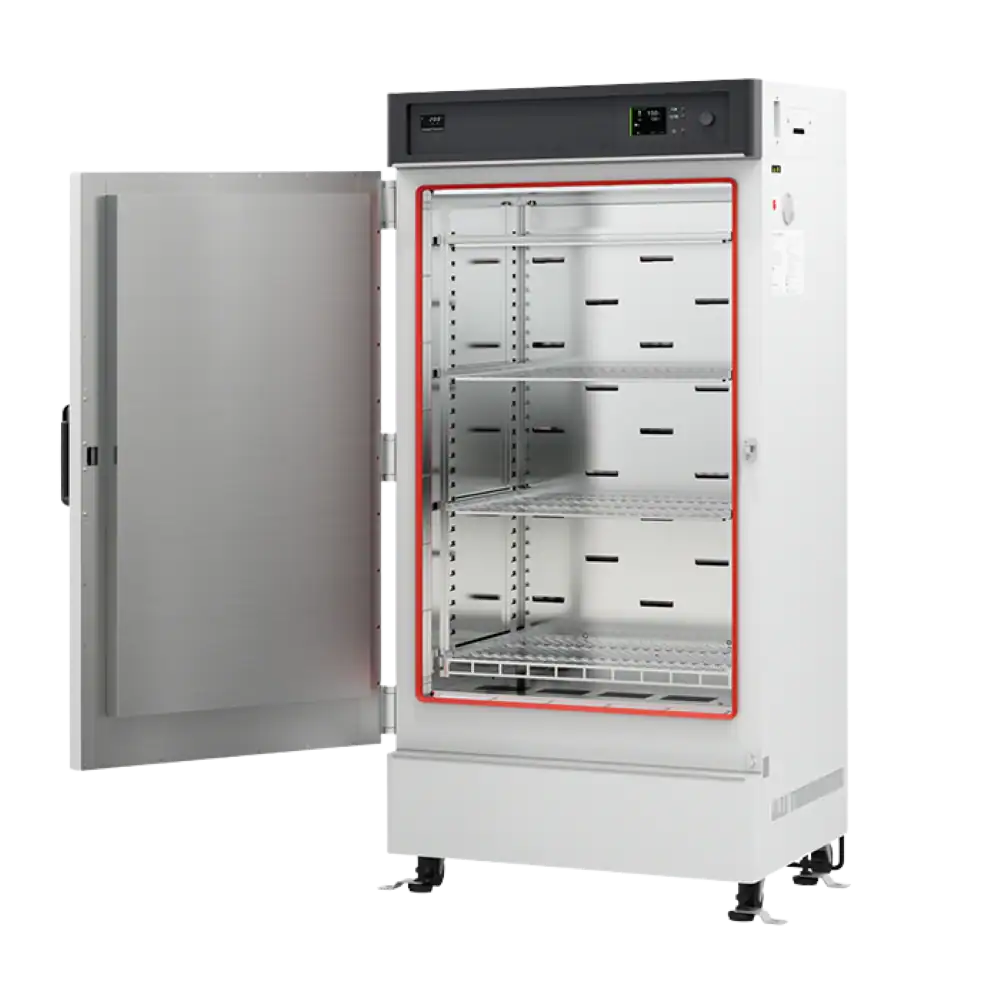
Laboratory ovens provide controlled dry heating for drying, curing, baking, sterilizing, and thermal testing. Types include forced convection (fan-circulated for uniformity), natural convection (gravity, for lightweight samples), and vacuum ovens (for heat-sensitive or moisture-sensitive materials requiring reduced-pressure drying).
Temperature Range
Ambient +10°C to 300°C (standard), 500°C+ (high-temp)
Uniformity
±2°C to ±5°C (model dependent)
Chamber Volume
0.5 cu ft to 10+ cu ft
Atmosphere
Air, inert gas, or vacuum
Common Applications
- Sample drying & moisture determination
- Glassware sterilization
- Curing & baking
- Thermal aging tests
Incubators
Incubators maintain precise temperature, and optionally humidity and CO₂ levels, for cell culture, microbiology, and biological sample growth. General-purpose incubators provide temperature control for microbial cultures. CO₂ incubators add gas and humidity control for mammalian cell culture. Shaking incubators combine temperature with orbital agitation for suspension cultures.
Temperature Range
Ambient +5°C to 80°C (standard)
CO₂ Control
0-20% (CO₂ models)
Humidity
Up to 95% RH (humidified models)
Chamber Volume
1 cu ft to 20+ cu ft
Common Applications
- Mammalian cell culture
- Bacterial & yeast growth
- BOD testing
- Seed germination
Muffle Furnaces
Muffle furnaces reach extreme temperatures for ashing, calcination, heat treatment, and materials testing. The muffle design isolates the sample chamber from the heating elements and combustion byproducts, providing clean, high-temperature processing for gravimetric analysis and advanced materials research.
Temperature Range
Up to 1,100°C (standard), 1,700°C (high-temp)
Heating Rate
5°C to 20°C per minute
Chamber Volume
1L to 45L+
Insulation
Ceramic fiber or refractory brick
Common Applications
- Ashing & loss on ignition
- Ceramics sintering
- Heat treatment & annealing
- Gravimetric analysis
Sterilizers & Autoclaves
Autoclaves and sterilizers use pressurized steam or dry heat to eliminate microorganisms from instruments, media, glassware, and biohazardous waste. Steam autoclaves are the standard for biological decontamination. Dry heat sterilizers serve applications where moisture is harmful. Both require validation protocols for regulated environments.
Steam Temperature
121°C to 134°C at 15-30 PSI
Dry Heat Temperature
160°C to 180°C
Chamber Volume
2L benchtop to 200L+ floor units
Cycle Types
Gravity, vacuum, liquid, porous load
Common Applications
- Media & reagent sterilization
- Instrument processing
- Biohazardous waste decontamination
- Surgical instrument sterilization
Rotary Evaporators
Rotary evaporators (rotovaps) efficiently remove solvents from samples through evaporation under reduced pressure. The rotating flask increases the surface area and promotes even evaporation, while the condenser recovers solvents for recycling or safe disposal. Essential for chemistry, natural products extraction, and pharmaceutical development.
Flask Capacity
50 mL to 50L
Rotation Speed
20 to 280 RPM
Bath Temperature
Ambient to 180°C
Vacuum
Requires external vacuum source
Common Applications
- Solvent removal & concentration
- Natural product extraction
- Chemical synthesis workup
- Solvent recycling
Dry Baths & Heat Blocks
Dry baths use interchangeable aluminum blocks to heat tubes, microplates, and slides without water. They eliminate contamination risk, require minimal maintenance, and accept blocks for 0.2 mL to 50 mL tubes. Ideal for enzyme incubations, sample denaturation, and temperature-dependent reactions in molecular biology.
Temperature Range
Ambient +5°C to 150°C
Uniformity
±0.1°C to ±0.5°C
Block Options
0.2 mL to 50 mL tubes, slides, microplates
Positions
1 to 4 block positions
Common Applications
- Enzyme incubation
- Sample denaturation
- Restriction digests
- Serum coagulation
Water Baths
Water baths provide uniform temperature through direct liquid contact for warming reagents, incubating samples, melting substrates, and performing enzyme reactions. Models range from basic unstirred baths to shaking, circulating, and refrigerated versions for precise temperature control across a wide range of applications.
Temperature Range
Ambient to 100°C (standard), -30°C to +200°C (circulating)
Capacity
2L to 28L+
Stability
±0.1°C to ±0.5°C
Type
Unstirred, shaking, circulating, refrigerated
Common Applications
- Reagent warming
- Agar melting
- Enzyme reactions & incubation
- Sample thawing
How to Choose: Thermal Equipment Comparison
Compare key factors across the four main thermal processing categories.
| Factor | Oven | Incubator | Autoclave | Furnace |
|---|---|---|---|---|
| Temperature | Up to 300-500°C | Ambient to 80°C | 121-134°C (steam) | Up to 1,700°C |
| Primary Use | Drying & curing | Cell/microbial growth | Sterilization | Ashing & heat treat |
| Atmosphere | Air, inert, vacuum | Air, CO₂ | Pressurized steam | Air or inert |
| Price Range | $1,500-$15,000 | $1,000-$20,000 | $3,000-$25,000+ | $2,000-$20,000 |
| Key Decision | Convection type | CO₂/shaking needs | Chamber volume | Max temperature |
Key Specifications Checklist
Before requesting a quote on thermal processing equipment, verify these specifications:
Frequently Asked Questions
What is the difference between a forced convection and natural convection oven?
Forced convection ovens use a fan to circulate heated air, providing more uniform temperature distribution throughout the chamber. Natural convection (gravity) ovens rely on passive air movement and are better suited for applications where airflow could disturb lightweight samples like powders or paper. Forced convection heats faster and recovers temperature more quickly after door openings.
Do I need an autoclave or a dry heat sterilizer?
Autoclaves use pressurized steam (typically 121°C at 15 PSI) and are the standard for sterilizing media, liquids, glassware, and biohazardous waste. Dry heat sterilizers operate at higher temperatures (160-180°C) and are used for items that cannot tolerate moisture, such as metal instruments, glass pipettes, and powders. Autoclaves sterilize faster; dry heat is gentler on heat-stable items that corrode with steam.
What temperature range do I need in a muffle furnace?
Standard muffle furnaces reach 1,100°C and handle most ashing, loss-on-ignition, and heat treatment applications. High-temperature models reaching 1,200-1,700°C are needed for ceramics, metallurgy, and advanced materials research. Consider the maximum temperature your application requires and choose a furnace rated at least 100°C above that for headroom and element longevity.
When should I use a water bath versus a dry bath for sample incubation?
Water baths provide excellent temperature uniformity through direct liquid contact and are standard for enzyme reactions, melting agar, and warming reagents. Dry baths (heat blocks) eliminate contamination risk from water, offer faster setup, and accept interchangeable blocks for different tube sizes. Dry baths are preferred for molecular biology work where water contamination could affect results.
What is the typical lead time for laboratory ovens and autoclaves?
Lead time depends on whether the model is stocked or custom-configured; large floor-standing autoclaves generally carry the longest lead times. We confirm the delivery timeline with every quote so you can plan accordingly.
Related Guides
Need Help Choosing Thermal Equipment?
From benchtop dry baths to floor-standing autoclaves, we help you match the right thermal processing equipment to your application. Request a quote for competitive pricing.