
Buyer's Guide
Cold Storage Equipment
A comprehensive guide to selecting laboratory cold storage, from -196°C cryogenic systems to pharmacy-grade refrigerators. Covers ULT freezers, low-temp freezers, chillers, freeze dryers, and more.
Understanding Laboratory Cold Storage
Cold storage is the backbone of any laboratory that works with biological samples, reagents, pharmaceuticals, or temperature-sensitive materials. From cryogenic freezers storing stem cells at -196°C to pharmacy refrigerators maintaining vaccines at precisely +2°C to +8°C, selecting the right equipment directly impacts sample integrity, regulatory compliance, and operational efficiency.
This guide covers seven major categories of cold storage equipment. For each, we explain what it is, what to look for in specifications, and how to match the equipment to your application. Whether you are outfitting a new biobank, upgrading aging pharmacy refrigerators, or adding point-of-use undercounter storage to a clinical lab, this guide provides the procurement framework you need.
Legacy Lab Supplies is an authorized distributor for leading cold storage manufacturers including Haier Biomedical, Scientemp, and True Scientific. All equipment carries the full manufacturer warranty and ships with our competitive pricing.
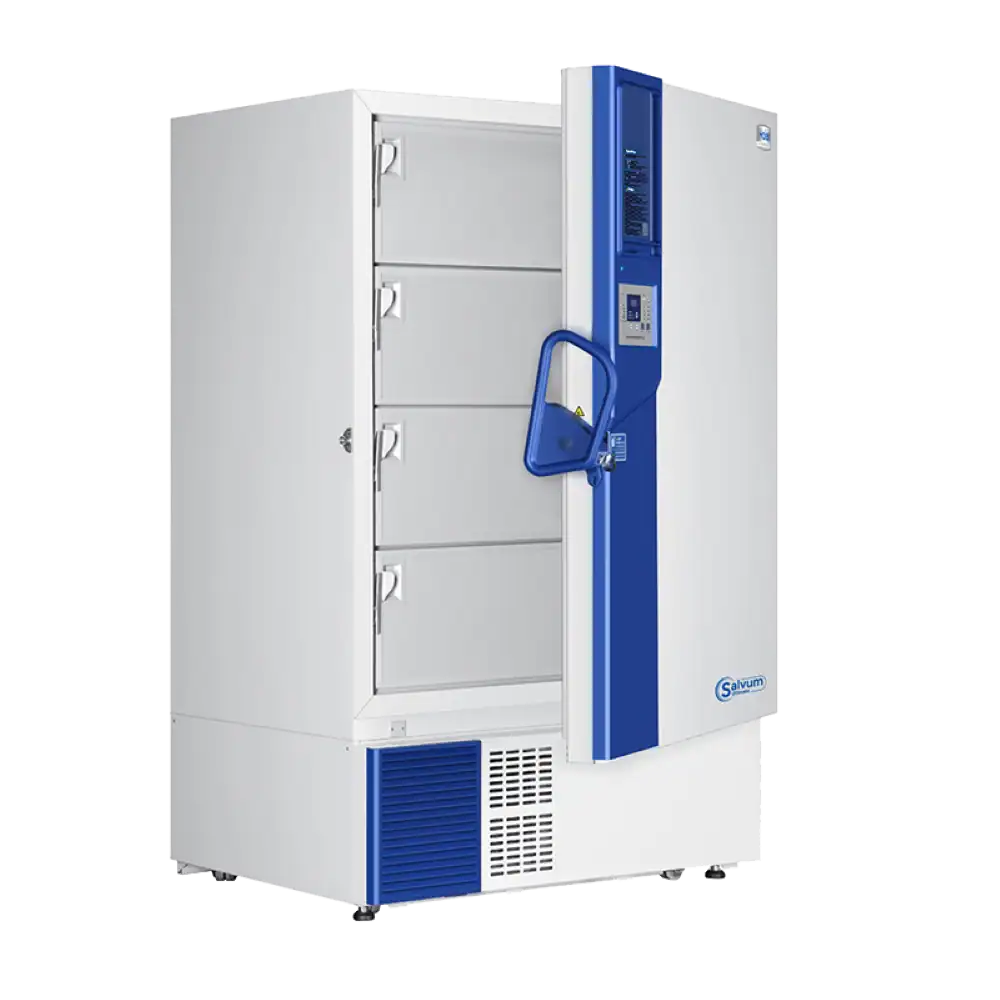
Ultra-Low Temperature (ULT) Freezers
ULT freezers maintain temperatures from -40°C to -86°C for long-term storage of biological samples, cell lines, enzymes, and temperature-sensitive reagents. They are essential for biobanking, pharmaceutical research, and clinical biorepositories.
Temperature Range
-40°C to -86°C
Capacity
3 cu ft to 28+ cu ft
Compressor Systems
Single or dual cascade
Power
115V or 208-230V
Common Applications
- Biobanking & sample repositories
- Pharmaceutical R&D
- Vaccine storage
- Enzyme & reagent preservation
Low-Temperature Freezers
Low-temperature freezers operate at -20°C to -40°C for routine laboratory sample storage. They consume significantly less energy than ULT freezers and are suitable for enzymes, buffers, samples, and reagents that do not require ultra-low temperatures.
Temperature Range
-20°C to -40°C
Capacity
5 cu ft to 25+ cu ft
Configuration
Upright or chest
Defrost
Manual or auto-defrost
Common Applications
- General sample storage
- Enzyme & buffer storage
- Backup cold storage
- Teaching laboratories
Pharmacy Refrigerators
Pharmacy-grade refrigerators maintain precise 2°C to 8°C temperatures for medication, vaccine, and reagent storage. They feature forced-air circulation, digital temperature monitoring, and are designed to meet CDC/VFC compliance requirements.
Temperature Range
+2°C to +8°C
Uniformity
±1°C or better
Monitoring
NIST-calibrated digital probes
Alarms
Visual, audible, and remote
Common Applications
- Vaccine storage (VFC compliance)
- Medication storage
- Blood bank refrigeration
- Reagent storage
Recirculating Chillers
Recirculating chillers provide precise temperature-controlled coolant for analytical instruments, rotary evaporators, reactors, and other laboratory equipment. They replace tap-water cooling with closed-loop systems for better temperature stability and water conservation.
Temperature Range
-20°C to +40°C (model dependent)
Cooling Capacity
200W to 5000W+
Stability
±0.1°C to ±0.5°C
Pump Pressure
5 to 20+ PSI
Common Applications
- Rotary evaporator cooling
- Analytical instrument cooling
- Reactor jacketing
- Laser system cooling
Undercounter Freezers
Undercounter freezers fit beneath laboratory benchtops and fume hoods, providing point-of-use cold storage without consuming floor space. Ideal for labs with limited square footage that need immediate access to frozen samples and reagents.
Temperature Range
-20°C to -30°C (standard), -40°C (specialty)
Capacity
1.5 cu ft to 6 cu ft
Height
Under 34 inches
Door Style
Solid or glass
Common Applications
- Point-of-use storage
- Clinical lab workstations
- Space-constrained laboratories
- Reagent staging
Freeze Dryers (Lyophilizers)
Freeze dryers remove moisture from frozen samples through sublimation, preserving biological activity and structural integrity. Used for preserving enzymes, bacteria, pharmaceuticals, and food science research samples for long-term stability.
Condenser Temperature
-50°C to -105°C
Ice Capacity
2L to 18L+
Vacuum
Down to 0.01 mBar
Configuration
Benchtop or floor-standing
Common Applications
- Pharmaceutical formulation
- Microorganism preservation
- Protein & enzyme stabilization
- Food science research
Cryogenic Freezers
Cryogenic freezers use liquid nitrogen (LN2) or mechanical refrigeration to reach temperatures below -130°C. Essential for cell line cryopreservation, stem cell storage, tissue banking, and any application requiring vitrification-level temperatures.
Temperature Range
-130°C to -196°C
Cooling Method
LN2 vapor/liquid or mechanical
Storage
Racks, canes, or inventory systems
LN2 Consumption
Varies by vessel size and fill level
Common Applications
- Stem cell cryopreservation
- Cell line banking
- Tissue & organ preservation
- IVF & reproductive medicine
How to Choose: Cold Storage Comparison
Use this comparison to narrow down which cold storage type matches your application and budget.
| Factor | ULT Freezer | Low-Temp Freezer | Pharmacy Fridge | Cryo Freezer |
|---|---|---|---|---|
| Temperature | -40°C to -86°C | -20°C to -40°C | +2°C to +8°C | -130°C to -196°C |
| Primary Use | Long-term biobanking | Routine storage | Medication/vaccine | Cell cryopreservation |
| Energy Cost | High | Moderate | Low | Very High (LN2) |
| Typical Warranty | 3-5 yr compressor | 2-3 years | 2-3 years | 1-2 years |
| Lead Time | Confirmed on quote | Confirmed on quote | Confirmed on quote | Confirmed on quote |
Key Specifications Checklist
Before requesting a quote on any cold storage equipment, verify these specifications against your requirements:
Frequently Asked Questions
What is the difference between an ultra-low temperature freezer and a low-temperature freezer?
Ultra-low temperature (ULT) freezers operate at -40°C to -86°C and are used for long-term biobanking, biological samples, and temperature-sensitive reagents. Low-temperature freezers typically operate at -20°C to -40°C and handle routine sample storage, enzyme storage, and general laboratory freezing needs at a lower energy cost.
Do pharmacy refrigerators need to meet specific compliance standards?
Yes. Pharmacy refrigerators used for vaccine storage must meet CDC Vaccines for Children (VFC) program requirements, including continuous digital temperature monitoring, NIST-calibrated probes, and audible alarms. Units should also meet state board of pharmacy regulations for medication storage.
How do I determine the right freezer capacity for my lab?
Calculate your current storage volume and add 25-30% for 2-3 years of growth. Consider box/rack configurations that match your sample format (2mL vials, plates, bags). Upright freezers offer better organization with shelves, while chest-style units provide better temperature recovery after door openings.
What backup systems should I have for critical cold storage?
Critical cold storage should include remote temperature monitoring with alarm notifications, CO2 or LN2 backup cooling systems, and connection to emergency generator power. Dual-compressor systems in ULT freezers provide redundancy, if one compressor fails, the other maintains safe temperatures while you arrange service.
Are laboratory freezers from Legacy Lab Supplies covered by manufacturer warranty?
Yes. As an authorized distributor for brands including Haier Biomedical, Scientemp, True Scientific, and others, all cold storage equipment carries the full manufacturer warranty, typically 2-5 years on compressors and 1-2 years on parts and labor. Purchasing from an authorized source protects your warranty coverage.
Related Guides
Ready to Upgrade Your Cold Storage?
Whether you need a single undercounter freezer or a complete biobank cold storage solution, we provide competitive pricing, manufacturer warranties, and expert guidance for every purchase.