
Buyer's Guide
Safety & Care Buying Guide
Biological safety cabinets, glove boxes, PCR workstations, glassware washers, and sterilization supplies. Choose the right containment, clean-workspace, and care equipment for your laboratory.
5
Equipment Types
26
Products
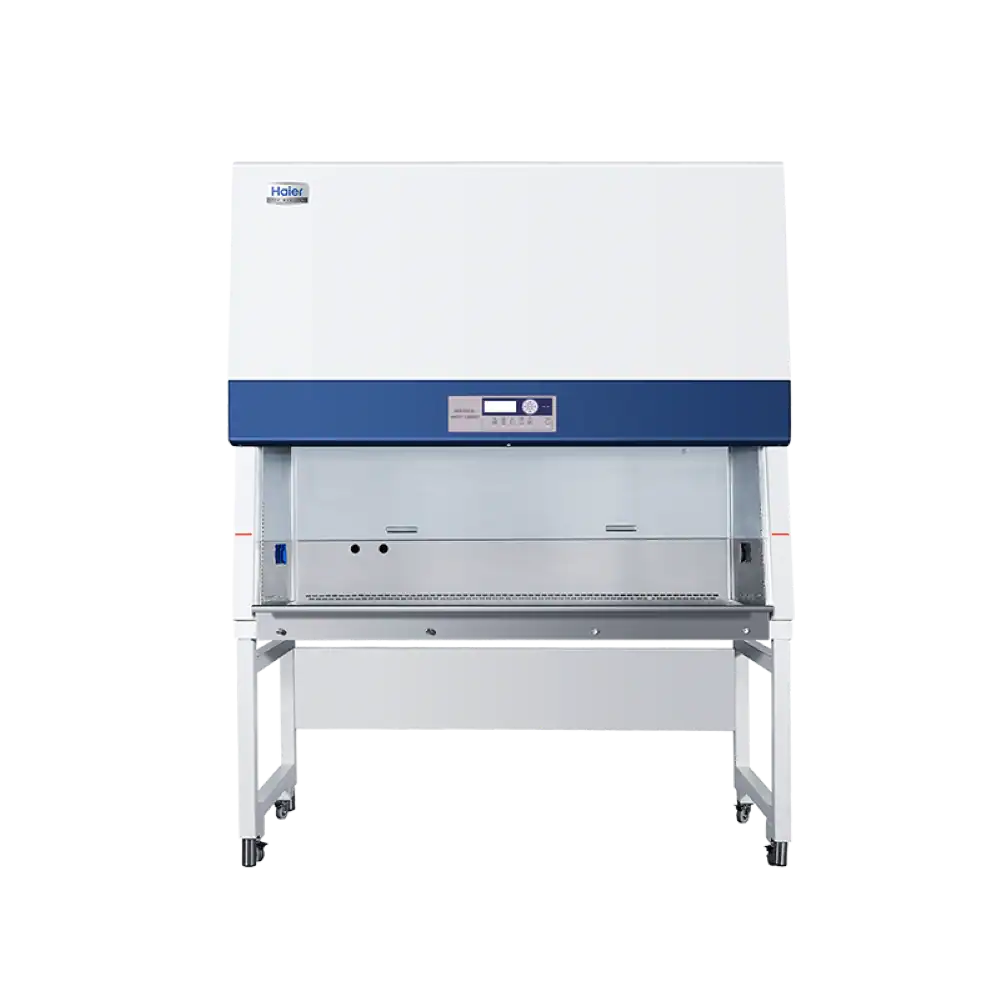
Biological Safety Cabinets (BSCs)
Biological safety cabinets provide personnel, product, and environmental protection when working with biohazardous materials. They are required for cell culture, microbiology, and handling of infectious agents at BSL-2 and above.
Protection
Personnel, product, and environmental
HEPA Filtration
99.99% at 0.3μm (supply and exhaust)
Work Width
3 ft, 4 ft, 5 ft, or 6 ft interior
Certification
NSF/ANSI 49 Class II Type A2 or B2
Key Considerations
- →Match BSC class to your biosafety level requirements (Class II Type A2 covers most BSL-2 work)
- →Size the cabinet to your workflow, too small leads to clutter inside the work zone
- →Type A2 cabinets recirculate 70% of air and can be ducted or use canopy connections
- →Type B2 cabinets exhaust 100% of air, required when working with volatile chemicals alongside biologicals
- →Verify electrical requirements: most require dedicated circuits and proper grounding
- →Annual certification is mandatory, budget for ongoing compliance costs
Glove Boxes
Glove boxes provide a fully sealed, controlled-atmosphere workspace for handling air-sensitive, moisture-sensitive, or extremely hazardous materials. They maintain inert gas environments or negative pressure containment for high-level biosafety work.
Atmosphere
Inert gas (N₂, Ar) or negative pressure
Oxygen Level
<1 ppm achievable with purifier
Moisture Level
<1 ppm achievable with purifier
Applications
Air-sensitive chemistry, BSL-3/4, potent compounds
Key Considerations
- →Determine if you need inert atmosphere (chemistry) or containment (biology/pharma), designs differ
- →Consider antechamber size and cycle time for sample throughput
- →Purifier regeneration cycles affect continuous operation, plan around maintenance windows
- →Glove material matters: butyl rubber for chemicals, Hypalon for solvents, CSM for general use
- →Integrated analytical instruments (balances, microscopes) require feedthrough planning
PCR Workstations
PCR workstations provide a HEPA-filtered, UV-decontaminated clean workspace specifically designed to prevent amplicon contamination during PCR sample preparation. They are essential for molecular biology and diagnostics labs performing routine PCR.
Filtration
HEPA-filtered recirculating air
Decontamination
UV-C germicidal lamp (254nm)
Work Surface
Chemical-resistant, easy to clean
Applications
PCR prep, qPCR setup, nucleic acid handling
Key Considerations
- →Separate pre-PCR and post-PCR workstations to prevent amplicon carryover
- →UV timer and sash interlock prevent accidental UV exposure during use
- →Recirculating HEPA is sufficient for PCR prep, you do not need a biosafety cabinet for standard PCR
- →Consider size: compact models for small labs, full-width for high-throughput
- →Electrical outlets inside the workstation for pipettors and small equipment
Glassware Washers
Laboratory glassware washers provide automated, validated cleaning for laboratory glassware, eliminating manual washing variability and ensuring reproducible cleanliness for analytical and research applications.
Capacity
50-200+ items per cycle (rack-dependent)
Water Temp
Up to 93°C for thermal disinfection
Drying
Forced hot air or HEPA-filtered drying
Compliance
GLP/GMP validated wash cycles
Key Considerations
- →Match rack configurations to your glassware inventory (flasks, beakers, pipettes, vials)
- →DI water final rinse is critical for analytical labs, verify water supply connections
- →Undercounter models save space; freestanding models handle higher throughput
- →Programming flexibility: different soil types need different cycle parameters
- →Consider drainage requirements and proximity to water/waste connections
Sterilization Accessories
Sterilization accessories include autoclave supplies, biological indicators, chemical indicators, sterilization pouches, and instrument trays that support validated sterilization processes in research and clinical laboratories.
Types
Biological indicators, chemical indicators, pouches, trays
Standards
ISO 11138, ISO 11140, AAMI ST79
Applications
Autoclave validation, instrument processing, media prep
Key Considerations
- →Biological indicators (spore tests) are the gold standard for verifying sterilization, run weekly minimum
- →Chemical indicators (Type 1-6) provide immediate visual confirmation of cycle exposure
- →Match pouch size to instrument size, overpacking impedes steam penetration
- →Self-sealing pouches vs. heat-seal pouches: self-sealing for lower volume, heat-seal for production
- →Document all sterilization cycles, required for GMP, CAP, and AAALAC compliance
Frequently Asked Questions
What is the difference between a Class I and Class II biological safety cabinet?+
Class I BSCs protect the operator and environment by drawing air inward through the work opening and exhausting through a HEPA filter, but do not protect the product from contamination. Class II BSCs provide three-way protection, operator, product, and environment, using HEPA-filtered laminar airflow over the work surface while drawing room air inward at the front opening. Class II cabinets are the most widely used type in microbiology, cell culture, and pharmaceutical research.
When should I use a glove box instead of a biosafety cabinet?+
Glove boxes are required when working with extremely hazardous materials (BSL-3/4 agents, potent compounds), oxygen-sensitive reactions, or when a completely sealed, controlled atmosphere (inert gas, low humidity) is necessary. Biosafety cabinets are sufficient for most BSL-2 work including cell culture, microbiology, and general sample handling where operator protection via air curtain containment is adequate.
Do PCR workstations need HEPA filtration?+
Yes, quality PCR workstations include HEPA-filtered recirculating air to maintain a clean workspace and UV decontamination to destroy residual DNA/RNA between sample preparations. This prevents amplicon contamination, the primary source of false positives in PCR. Workstations with built-in UV timers and interlocked sash designs provide the best contamination control.
How often should biosafety cabinets be certified?+
Biosafety cabinets should be certified annually by a qualified technician, per NSF/ANSI 49 standards. Additional certification is required after any relocation (even within the same room), HEPA filter replacement, or significant repair. Annual certification verifies inflow velocity, downflow velocity, HEPA filter integrity, and alarm functionality.
What are the advantages of a laboratory glassware washer over manual washing?+
Laboratory glassware washers provide validated, reproducible cleaning with documented wash cycles, critical for GLP/GMP compliance. They eliminate cross-contamination risk between users, reduce chemical exposure from manual acid baths, and dramatically improve throughput. Most lab washers accommodate specialized racks for volumetric flasks, pipettes, and beakers with programmable cycles for different soil types.
Need Help Choosing Safety Equipment?
Our team can help you select the right containment, clean-workspace, and sterilization solutions for your specific applications and compliance requirements.