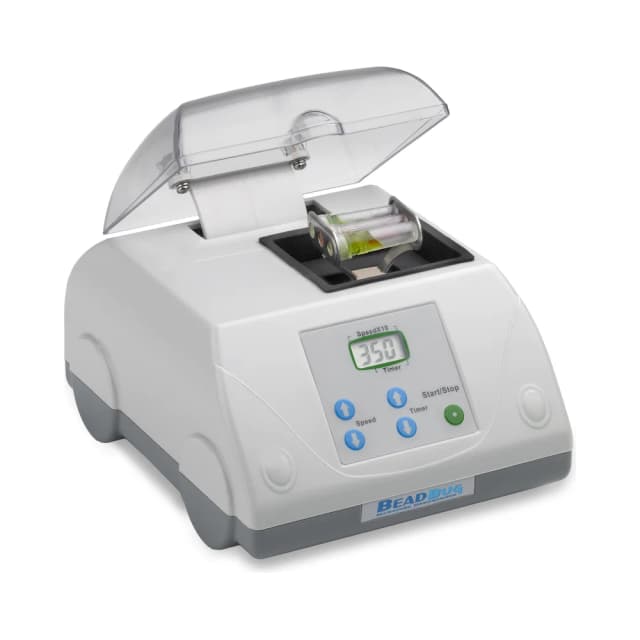
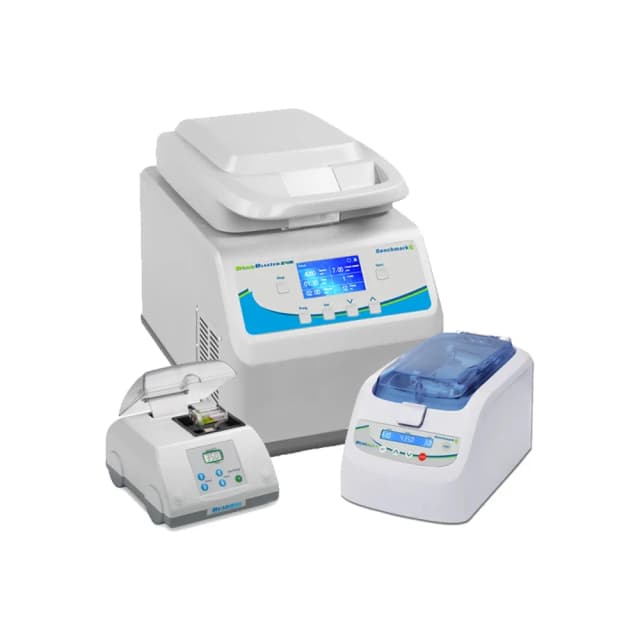
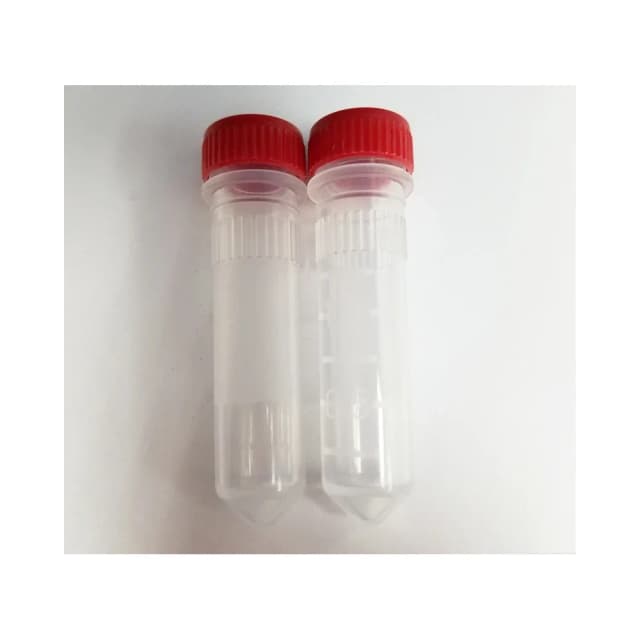
The IPD9600 BeadBlaster™ 96 is a high-throughput bead-mill homogenizer engineered for wet homogenization, dry grinding, and cryogenic grinding (cryogrinding) of biological, environmental, and industrial samples. The defining feature is 96-position throughput, the instrument processes a 96-well plate of samples (or arrays of microtubes / 50 mL tubes / 25 mL or 50 mL stainless-steel grinding jars) in a single ~1 minute cycle. The arced motion of the sample holders combined with a powerful motor drives the grinding beads through samples with sufficient force to lyse Gram-positive bacteria, plant tissue, fungal cells, soil-bound microbes, and other difficult-to-disrupt sample types that would defeat manual or sonicator-based lysis.
Voltage options: This unit can be ordered with European voltage requirements (230V/50Hz). Contact us to order.
Key Specifications
| Speed range | 180 to 1,800 rpm in 100 rpm increments |
| Ambient operating temperature | 4 °C to 40 °C |
| Cycle duration | 1 second to 59 minutes 59 seconds (programmable) |
| Pause duration | 1 second to 59 minutes 59 seconds (programmable) |
| Cycles per program | Up to 99 |
| Number of stored programs | 9 |
| Sample-holder accessories | 96-well plate adapters (set of 2, IPD9600-96), microtube adapters, 50 mL tube adapters, stainless-steel grinding jars (25 mL or 50 mL, set of 2 each) |
| Safety cover | See-through wrap-around clear acrylic; auto-locks during operation; lifts up for sample-holder access |
| Display | Large digital touchscreen control panel |
Application Profile
Microbiome / 16S rRNA prep with bead-mill lysis. Difficult-to-lyse microbial samples (soil microbiome, oral microbiome, gut-derived bacteria with thick cell walls) require mechanical disruption rather than enzymatic lysis alone. The BeadBlaster 96 with appropriate bead size (typically 0.1–0.5 mm zirconia or stainless steel for bacteria) lyses 96 samples in parallel, supporting batch-format extraction prep.
Plant-tissue homogenization. RNA / DNA extraction from leaf, root, seed, or woody plant tissue, bead milling with larger beads (typically 1.0–3.0 mm stainless steel) breaks up cellulose-rich cell walls that defeat freeze-thaw or detergent-only lysis.
Fungal-cell disruption. Yeast and filamentous fungi require mechanical lysis for efficient nucleic-acid or protein recovery; bead milling with appropriate bead size is the standard method.
Cryogrinding for thermolabile samples. Pre-chilled bead-mill cycles preserve thermolabile target molecules (RNA, intact protein complexes, post-translationally modified species) that conventional homogenization heat-degrades. The BeadBlaster 96 supports cryogrinding by accepting pre-chilled sample holders and allowing programmable pause cycles for re-chilling between bursts.
Environmental sample disruption. Soil, sediment, biofilm, and particulate samples for downstream extraction or characterization. The 96-position throughput supports batch-format environmental-monitoring and ecology-survey workflows.
Industrial and food-science homogenization. Food matrix sample prep for QC, supplement-content analysis, and contaminant screening, typically 50 mL or 25 mL grinding jars with stainless-steel beads.
Pharmaceutical and biotech sample prep. Cell-pellet disruption for protein extraction, formulation-intermediate homogenization, and stability-study sample prep.
Design Architecture
Arced sample-holder motion + powerful motor. The motion path is engineered to maximize bead-impact energy transfer to the samples while keeping cycle time short, most samples process in 1 minute or less at appropriate bead size and speed.
180–1,800 rpm range with 100 rpm increments. Lower speeds for gentle disruption (intact organelles, soft tissue); higher speeds for hard-to-lyse samples (bacterial spores, plant cell walls, mineralized samples).
99-cycle programmability. Single-step protocols (one burst, no pause) cover routine lysis. Multi-step protocols (burst → pause → burst → pause...) are required for thermolabile samples to allow inter-cycle re-chilling, typically 9 to 30 cycles of 30-second burst + 30-second pause for sensitive RNA workflows.
9 programs stored in memory. A shared instrument can store the standard protocols for every sample type the lab supports, recallable from the touchscreen.
Grinding-jar accessories extend the instrument to high-energy or high-volume work beyond microtube or 96-well capacity. Stainless-steel jars come in 25 mL (IPD9600-25S) and 50 mL (IPD9600-50S) sets of two, each with a replaceable gasket (IPD9600-25G / IPD9600-50G). For the highest-energy or abrasive samples, a 25 mL Tungsten Carbide jar (IPD9600-25TC) is available, and a 35 mL Zirconium Oxide jar (IPD9600-35ZO) adds chemical resistance for aggressive solvent-and-sample combinations.
See-through wrap-around clear acrylic safety cover. Visualization during homogenization without opening the chamber. Auto-locks during operation. Hard interlock prevents access while sample holders are in motion.
Large digital touchscreen control panel. All parameters (speed, cycle duration, pause duration, cycle count) programmed via touchscreen; protocols saved by name.
Frequently Asked Questions
How many samples can the BeadBlaster 96 process at once? Up to a full 96-well plate (or arrays of microtubes, 50 mL tubes, or 25 mL / 50 mL grinding jars) in a single cycle of roughly one minute.
What is the speed range? 180 to 1,800 rpm in 100 rpm increments, lower speeds for gentle disruption, higher speeds for hard-to-lyse samples such as bacterial spores and plant cell walls.
Can it be used for cryogenic grinding? Yes. It accepts pre-chilled sample holders and supports programmable pause cycles for re-chilling between bursts, preserving thermolabile targets such as RNA and intact protein complexes.
How many programs can it store? Up to 9 programs in memory, each with up to 99 cycles, all recallable from the touchscreen.
What sample types can it disrupt? Gram-positive bacteria, plant tissue, fungal cells, soil-bound microbes, and other difficult-to-disrupt samples that defeat manual or sonicator-based lysis.
Ordering & Configuration
Standard configuration. The IPD9600 ships with the instrument, see-through safety cover, large touchscreen, 120 V US power cord, operator's manual, and packaging materials. Sample holders / adapters / grinding jars sold separately. Order per workflow.
Compatible accessories and consumables (sold separately):
- IPD9600-96: 96-well plate adapter, set of 2
- Stainless-steel grinding jars: 25 mL (IPD9600-25S) and 50 mL (IPD9600-50S), with replacement gaskets (IPD9600-25G / IPD9600-50G)
- High-energy jars: Tungsten Carbide 25 mL (IPD9600-25TC) and Zirconium Oxide 35 mL (IPD9600-35ZO)
- Pre-filled bead microtubes in various bead types (4 mm steel, 9.5 mm steel, ceramic, glass)
Voltage variants. This SKU is the 120 V US-plug configuration; 115 V or 230 V is available by special order.
Use the quote request to specify: voltage and plug type, sample type (drives bead-size and grinding-jar recommendations), throughput per week (drives wear-part inventory: gaskets, adapters), training, and lead time.
Warranty: Manufacturer's standard Benchmark Industrial warranty applies.
Bead-mill vs sonicator selection: for batch-format throughput (96-well plates, multi-tube arrays), bead milling is the right method, the BeadBlaster 96 processes all samples in parallel. For single-sample or low-throughput workflows where cavitation-based disruption is preferred (sensitive protein complexes, samples where bead carryover would interfere downstream), a sonicator like the Pulse 650 (DP0650) or Pulse 150 (DP0150) in the Benchmark line is the alternative. Many labs operate both.