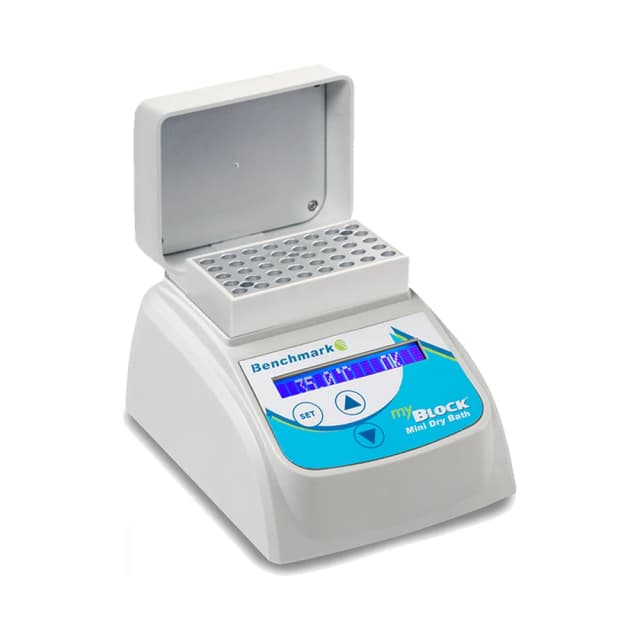
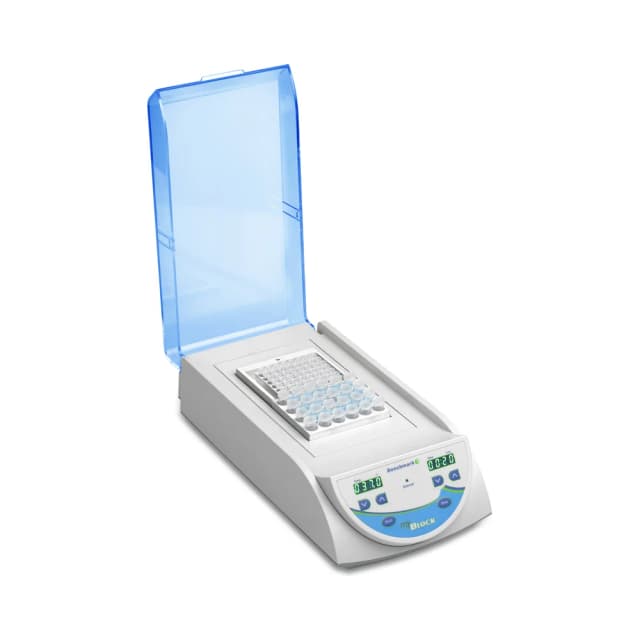
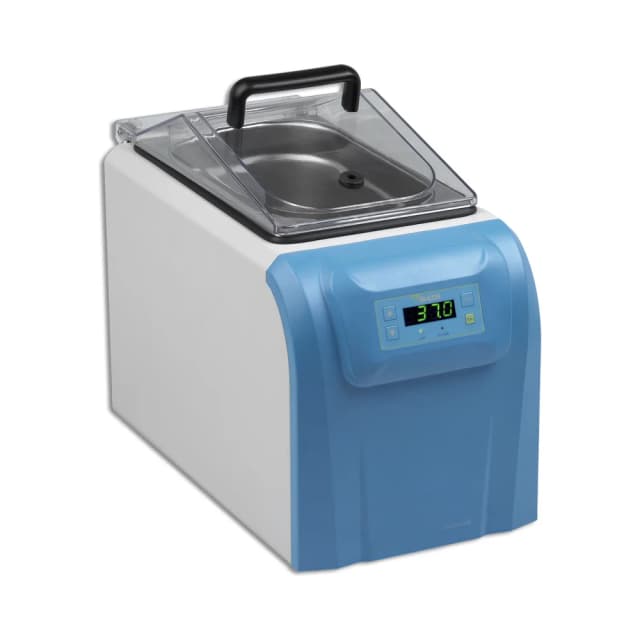
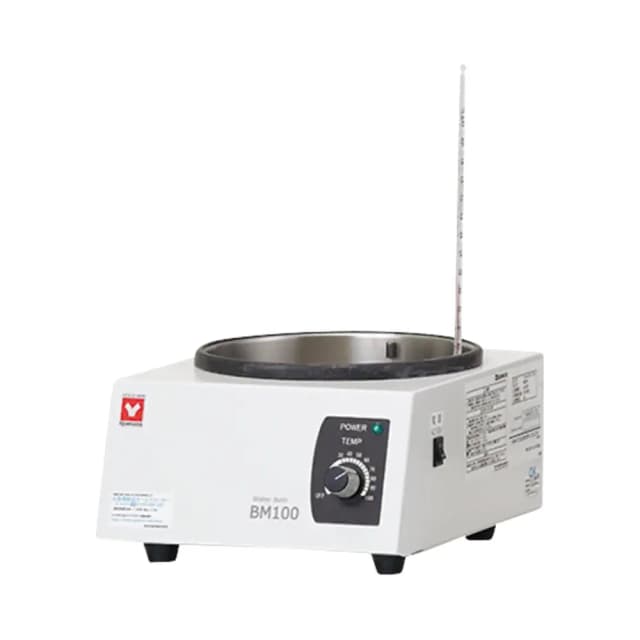
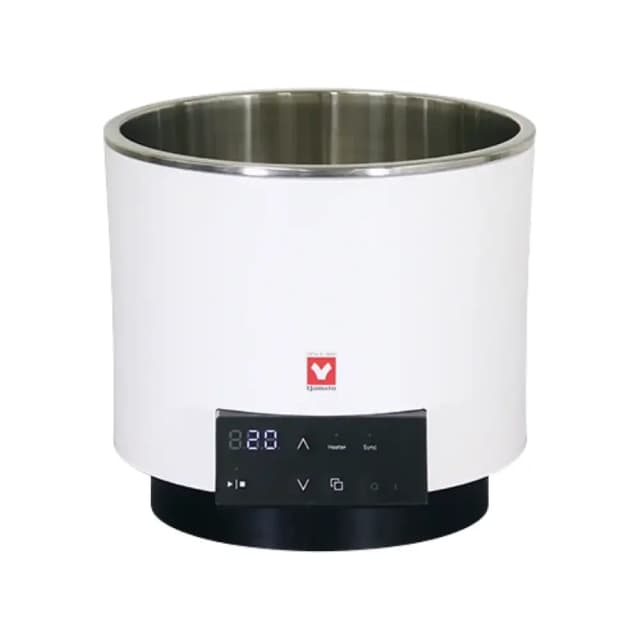
The H5100-HCT MultiTherm™ Touch is a combined heating + cooling + mixing block heater for tubes from 0.2 mL through 50 mL and microplate formats. Where a standard dry block heater holds samples at temperature without mixing, and a vortex mixer agitates without temperature control, the MultiTherm Touch combines both into a single instrument: temperature control from sub-ambient (4 °C cooling for protocol-end sample holding) up through DNA-denaturation temperatures, paired with mixing up to 3,000 rpm, all controlled via a full-color touchscreen with 50 program slots × 5 steps each. The "Touch" naming distinguishes this from the original button-driven MultiTherm, the touchscreen, expanded speed range, advanced programming features, and heated-lid option are the upgrades.
Voltage options: This unit can be ordered with European voltage requirements (230V/50Hz). Contact us to order.
Key Specifications
| Temperature range | DNA denaturation through 4 °C cooling (broad range; consult brochure for current spec) |
| Mixing speed range | Up to 3,000 rpm |
| Block options | 15 interchangeable blocks for samples from 0.2 mL through 50 mL plus various plate formats |
| Block changeover | Tool-less; automatically recognized by software upon insertion |
| Display / control | Full-color touchscreen |
| Program storage | 50 programs, each up to 5 steps |
| Programming features | Adjustable ramp rates; preheat function; clockwise/counterclockwise mixing direction; interval mixing |
| Quick-mix function | "Short" button (immediate mixing at maximum speed) |
| Optional heated lid | Yes (separately ordered): prevents condensation and evaporation on temperature-cycled samples |
| Insulation | Insulated chamber protects users from hot surfaces; helps maintain block temperature |
Application Profile
DNA / RNA denaturation and renaturation protocols. Heated-block protocols at 95 °C followed by controlled cool-down, the MultiTherm Touch's adjustable ramp rates support method-development work where ramp rate matters for hybridization kinetics.
Reverse-transcription and ligation reactions. Temperature-controlled enzymatic reactions (RT at 42 °C, ligation at 16 °C, restriction digestion at 37 °C) where holding the sample at the reaction temperature for the full reaction time is required. The mixing capability adds gentle agitation that pure heated-block instruments can't provide.
Restriction digestion and enzymatic-modification reactions. Long enzymatic incubations at 37 °C with periodic mixing. The interval-mixing programmability supports gentle periodic agitation that maintains enzyme-substrate contact without continuous shear.
Sample resuspension after lyophilization or precipitation. Heated mixing speeds up resuspension of dried protein pellets, lyophilized reagents, or post-precipitation pellets; the combined heat + mix capability does in one instrument what would otherwise require a heated bath plus a separate vortexer.
Cell-culture sample handling. Sample-prep workflows where mammalian-cell samples need temperature-controlled handling (37 °C maintenance for short periods, 4 °C cooling for sample-prep hold-points).
Protein sample preparation. Heated denaturation for SDS-PAGE sample prep (95 °C × 5 min in sample loading buffer), controlled cooling, and gentle mixing for re-suspension of pelleted proteins, all on one instrument.
Multi-step protocol workflows. The 50-program × 5-step memory supports complex multi-step protocols (e.g., lysis at 60 °C → denaturation at 95 °C → cool-down to 4 °C with mixing) recallable by name from the touchscreen.
Design Architecture
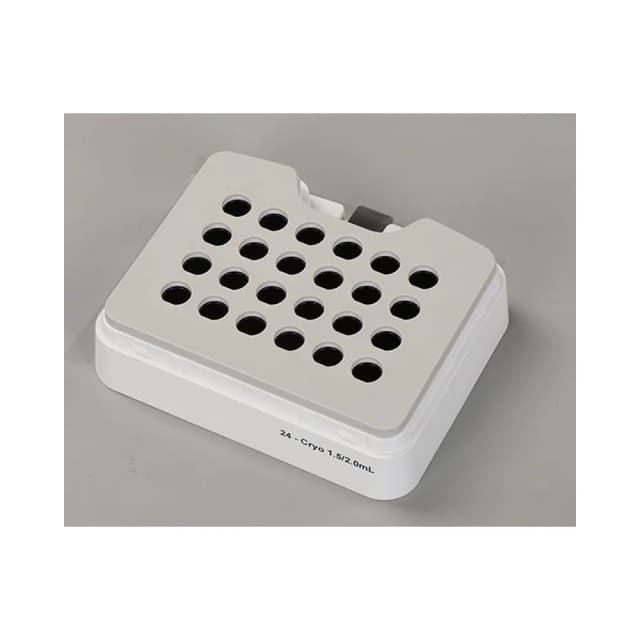
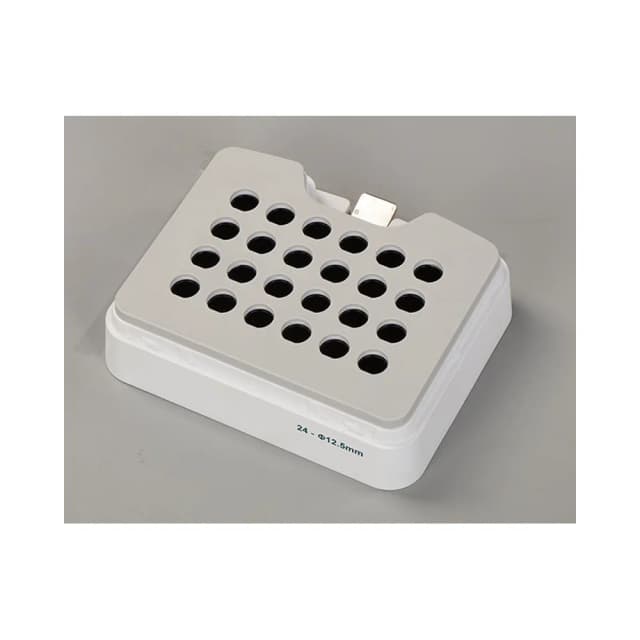
15 interchangeable block options are the defining flexibility feature, different block geometries accommodate tube formats from 0.2 mL PCR strips/tubes and 0.5 mL tubes, through 1.5 / 2.0 mL microtubes (e.g., H5100-15 for 35 × 1.5 mL, H5100-20 for 35 × 2 mL), 5 mL centrifuge tubes (H5100-5MT), 12 mm tubes (H5100-12), 15 mL conicals (H5100-150) and 50 mL conicals (H5100-500), to combination blocks (H5100-CMB), cryotube blocks (H5100-2CR), and a microplate block (H5100-MP).
Tool-less block changeover. Blocks insert and lock without tools; software automatically recognizes the block type upon insertion, no operator parameter-entry required to register the new block.
Full-color touchscreen for programming and status viewing. All operating parameters entered via touchscreen; status of running programs displayed in real time.
50 programs × 5 steps per program. Multi-step protocol storage supports complex workflows recallable by name. Programming features per step include adjustable ramp rate, mixing direction (clockwise / counterclockwise), interval mixing, and preheat option.
Adjustable ramp rates for method-development work where temperature-transition speed matters for the protocol (high-fidelity enzyme reactions, hybridization kinetics, cooling-rate-sensitive precipitations).
Quick-mix "Short" button for immediate mixing at maximum speed, useful for brief sample-mixing pulses outside of programmed protocols.
Optional heated lid. Sold separately; prevents condensation on tube caps during heated cycle steps and reduces sample evaporation on long incubations. Particularly important for small-volume samples (≤100 µL) where evaporative loss would change concentration over the incubation period.
Insulated chamber. Protects operators from hot block surfaces and helps maintain block temperature when ambient laboratory air would otherwise pull heat from the chamber.
3,000 rpm maximum mixing speed. Higher than the original MultiTherm. It supports vortex-class mixing for samples that need vigorous agitation, while still providing gentle mixing options at lower programmed speeds.
Frequently Asked Questions
What does the MultiTherm Touch (H5100-HCT) do? It combines heating, cooling, and mixing in one block heater for tubes from 0.2 mL through 50 mL and microplate formats.
What is the mixing speed range? Up to 3,000 rpm, higher than the original MultiTherm.
How many blocks are available and how do they change over? 15 interchangeable blocks, with tool-less changeover that the software automatically recognizes upon insertion.
How many programs can the H5100-HCT store? 50 programs, each up to 5 steps, with adjustable ramp rates, mixing direction, and interval mixing.
Are blocks included with the instrument? No. Blocks are sold separately; order at least one matched to the dominant tube format in the workflow.
Ordering & Configuration
Standard configuration. The H5100-HCT ships with the MultiTherm Touch chassis, full-color touchscreen, US 100–240 V power cord, operator's manual, and packaging materials. Blocks sold separately. Order at least one block matched to the dominant tube format in the workflow.
Compatible blocks (sold separately):
| Block SKU | Format |
| H5100-05 | 24 × 0.5 mL tubes |
| H5100-15 | 35 × 1.5 mL tubes |
| H5100-20 | 35 × 2 mL tubes |
| H5100-CMB | 15 × 0.5 mL + 20 × 1.5 mL tubes (combination) |
| H5100-5MT | 8 × 5 mL centrifuge tubes |
| H5100-12 | 24 tubes, 12 mm diameter |
| H5100-2CR | 24 × 1.5/2 mL cryotube |
| H5100-150 | 8 × 15 mL tubes |
| H5100-500 | 4 × 50 mL tubes |
| H5100-MP | Microplate |
Plus additional block formats. Confirm against the current Benchmark catalog at order.
Voltage variants. The H5100-HCT is 100–240 V universal with a US cord (this SKU).
Optional accessories. A heated lid is separately ordered for condensation/evaporation control on temperature-cycled samples.
Use the quote request to specify: voltage and plug type, block selection per workflow tube formats (multi-block lab cores typically order 3–5 blocks at first install), heated-lid inclusion if working with small-volume long-incubation samples, training, and lead time.
Warranty: Manufacturer's standard Benchmark Scientific warranty applies.
MultiTherm Touch vs alternatives: if the workflow is temperature-only (no mixing required), a dedicated dry-block heater at lower price point covers it. If the workflow is mixing-only at ambient temperature (no temperature control), a multi-tube vortexer (e.g., BV1010 BenchMixer XL) is the simpler instrument. The MultiTherm Touch earns its slot when both heating/cooling and mixing are required in the same workflow and consolidating to one instrument is operationally valuable.