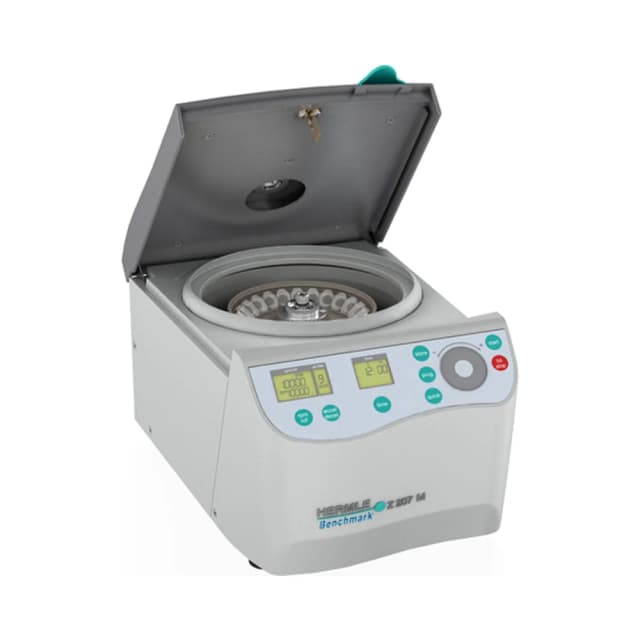
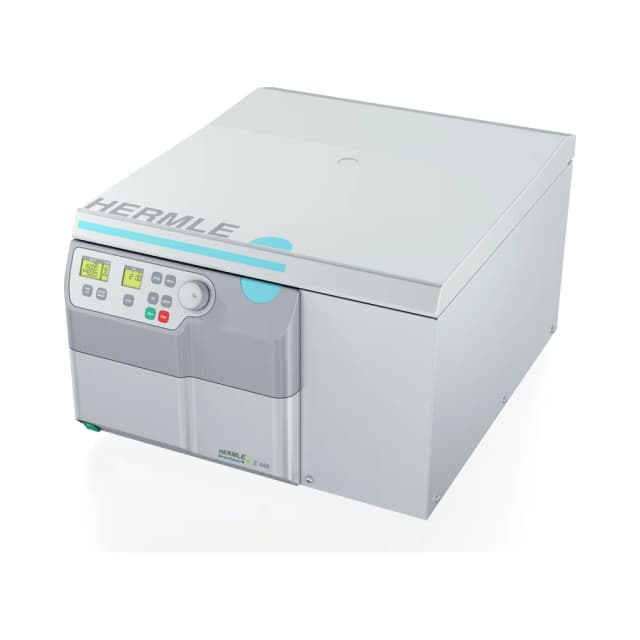
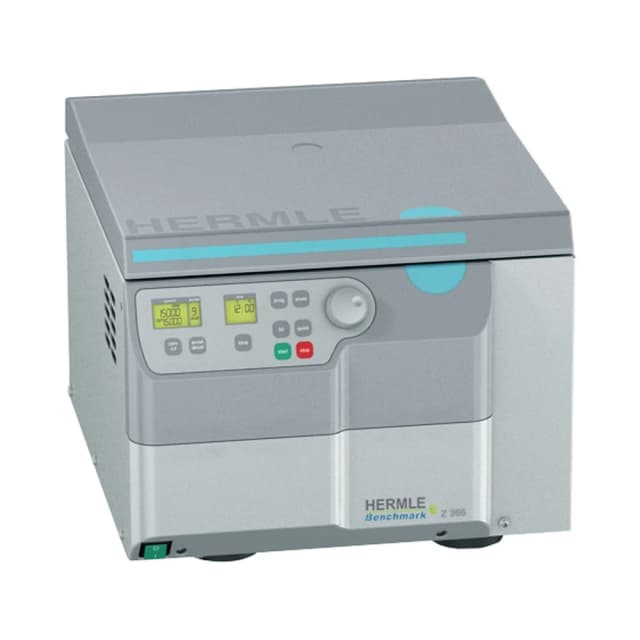
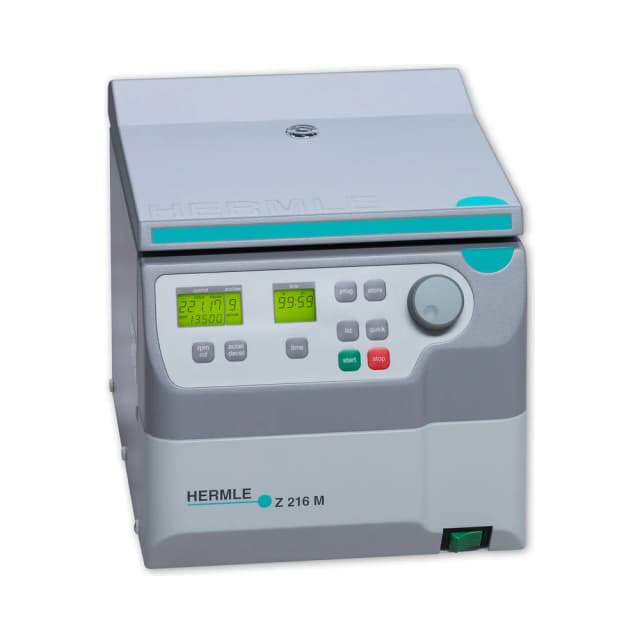
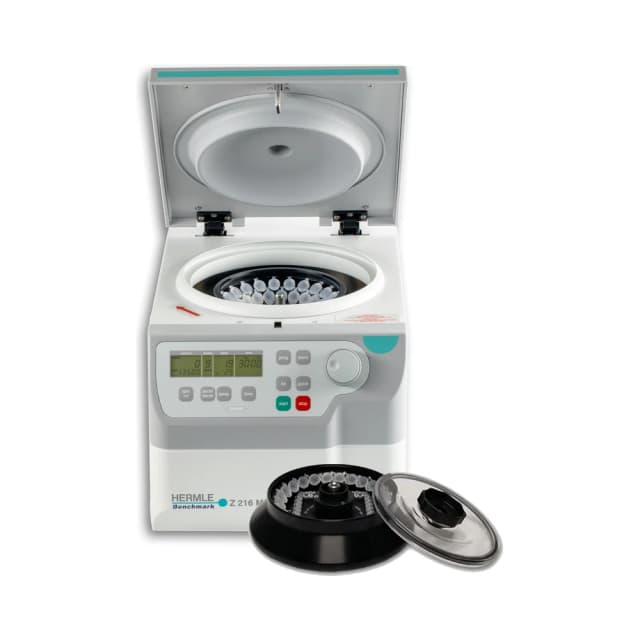
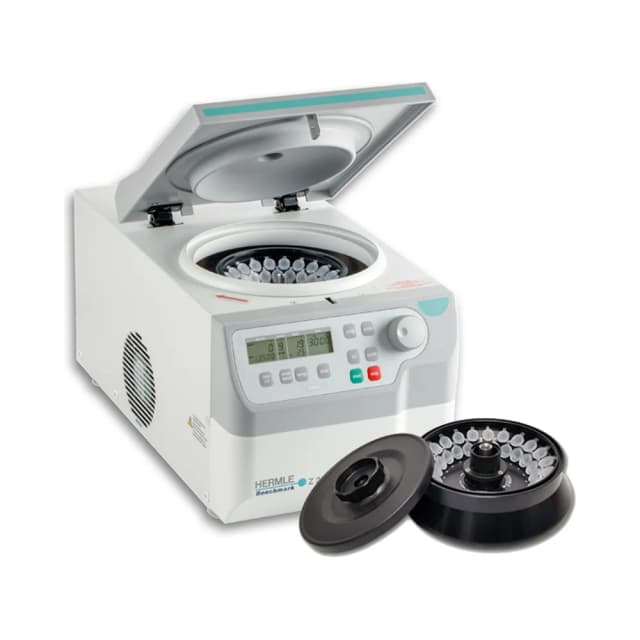
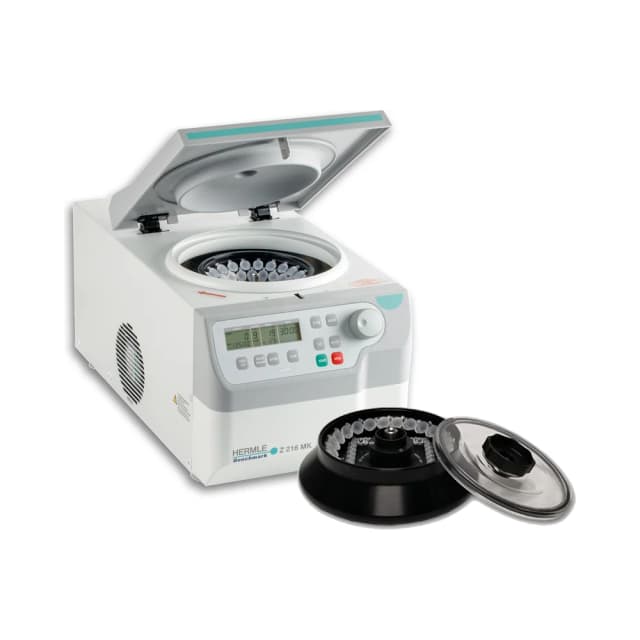
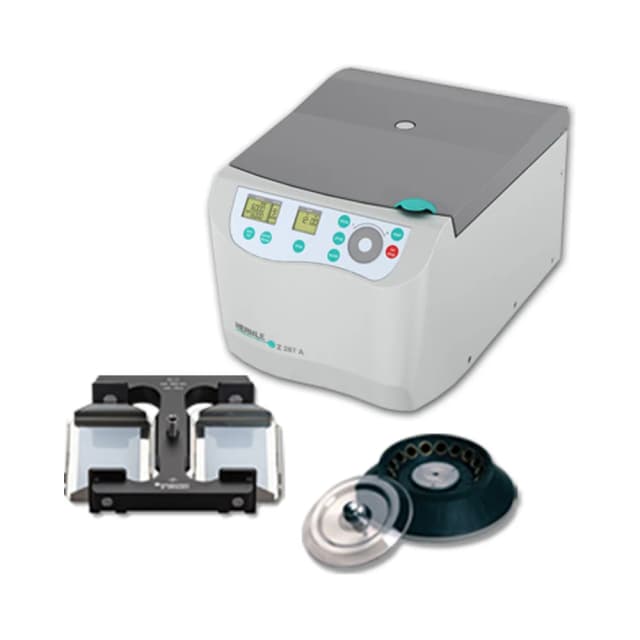
The Z207-A-CMB is a Z207-chassis compact centrifuge configured with a combination rotor, the Z207 platform (same as Z207-A clinical, Z207-H hematocrit, Z207-M microcentrifuge) shipped with a single rotor that accepts multiple tube formats simultaneously rather than a single-format rotor. The COMBI-Rotor configuration is the right pick when the lab's daily workflow spans multiple tube formats and the operator wants to spin them in one cycle without a rotor-swap step. Like the rest of the Z207 family, the Z207-A-CMB ships with EZ-Scroll touchpad control and the 99-slot program memory that supports multi-protocol shared use.
Voltage options: This unit can be ordered with European voltage requirements (230V/50Hz). Contact us to order.
Key Specifications
| Max. speed | 6,800 rpm (chassis spec; rotor-specific cap may be lower per RFID rating) |
| Max. RCF | 4,394 × g (chassis spec) |
| Capacity | Mixed tube formats per the COMBI-Rotor configuration (1.5/2.0 mL microtubes + larger formats; confirm exact configuration on quote) |
| Speed range | 200 – 6,800 rpm |
| Running time | 10 s to 59 min 50 s (10 s increments); 1 min to 99 h 59 min (1 min increments); momentary spin |
| Acceleration / deceleration | Within 13 seconds; 10 selectable rates including unbraked |
| Speed display | rpm or RCF, increments of 10 |
| Program memory | 99 saved runs (including rotor type) |
| Dimensions (W × H × D) | 11 in × 9.5 in × 13.7 in (28 × 24 × 35 cm) |
| Weight | 17.6 lb (8 kg, chassis baseline; combination rotor mass may differ slightly) |
| Power input | 50 W |
| Power supply | 120 V / 50 – 60 Hz |
| Noise level | < 60 dBA at max. speed |
| Cooling | Air-cooling system |
| Safety standards | IEC 61010 |
| List price | $2,545.00 |
Application Profile
Mixed-format clinical and research workflows. When a single workflow needs to spin (for example) 1.5 mL primary samples plus 5 mL clinical aliquots plus 15 mL conical bulk samples in one cycle, a combination rotor processes all formats simultaneously. Avoids the per-format rotor-swap step and the cycle-time overhead it implies.
Method development. Protocol development that compares pelleting behavior across tube formats benefits from spinning all formats under identical g-force and time conditions in a single cycle.
Educational and teaching labs. Class-format workflows where each student sample may be in a different tube format (depending on volume). Combination rotor handles them together rather than requiring tube-format pre-sort.
Multi-PI shared bench environments. When the bench is used by multiple users running different protocols on different tube formats, the combination rotor reduces protocol-switch friction.
Phlebotomy / clinical-research overflow. When the primary clinical centrifuge is occupied and the operator needs to run a quick mixed-format batch, the Z207-A-CMB serves as the flexible secondary instrument.
Design Architecture
Z207 chassis baseline. The Z207-A-CMB shares the chassis spec with the Z207-A clinical, Z207-H hematocrit, and Z207-M microcentrifuge, same 11 × 9.5 × 13.7 inch footprint, same 17.6 lb baseline weight, same 50 W power input.
Combination rotor (COMBI-Rotor) configuration. The defining feature. The rotor accepts multiple tube formats in defined positions. Exact format inventory varies; confirm at quote which mixed-format configuration ships with this SKU. The chassis's rotor pre-selection feature reads the COMBI-Rotor's identity and applies the rotor-rated maximum speed automatically.
Maintenance-free induction motor. No brush wear; air-cooling keeps sample chamber near ambient.
EZ-Scroll capacitive touchpad for splash-proof, gloves-friendly programming.
Electrical lid-lock with rotor-type pre-selection. Lid cannot unlock during a run; pre-selection caps maximum speed at the rotor's rated maximum.
Active imbalance identification with cut-off. Especially important with combination rotors where mixed tube masses across positions create asymmetric loading risk, the chassis's per-rotor imbalance threshold catches asymmetric loads before excursion damage.
Quick accel/decel within 13 seconds for fast cycle turnaround.
10 acceleration / 10 deceleration rates including unbraked. The unbraked option is useful when the combination rotor includes loose-pellet samples that braked deceleration would disturb.
Sleep mode for energy savings between use periods.
99-slot program memory with rotor type stored per program.
Ordering & Configuration
Included: Z207-A-CMB body with the COMBI-Rotor pre-installed, operator's manual, power cord. Confirm the exact COMBI-Rotor configuration (tube positions and formats accepted) on the quote line, combination-rotor configurations vary across Hermle catalog generations.
Voltage variants: 230 V / 50–60 Hz model is available by special order.
Z207 family alternatives (same chassis, different rotor):
- Z207-A: 8 × 15 mL fixed-angle rotor (clinical 15 mL workflow specialist), $2,786
- Z207-H: 24-capillary hematocrit rotor (clinical hematocrit specialist)
- Z207-M: 24 × 1.5/2.0 mL microtube rotor (molecular biology specialist)
Step-up: For higher-RCF mixed-format work, see Z327 Universal Centrifuge with the deep adapter library that extends a single rotor across most common tube formats.
Warranty & service: 5-Year Hermle warranty (3 years full + 2 years drivetrain). Rotor validation, balance checks, and North American service through the Benchmark / Hermle distributor network. Combination-rotor balance validation is particularly important, recommended at install plus annually.
Confirm voltage, exact COMBI-Rotor configuration (which tube formats and how many positions per format), training, and lead time at quote.
Frequently Asked Questions
What is a COMBI-Rotor? A combination rotor that accepts multiple tube formats in defined positions, so a mixed-format batch spins in one cycle without a rotor-swap step.
What is the maximum speed of the Z207-A-CMB? 6,800 rpm / 4,394 × g at the chassis spec; the RFID-read rotor cap may be lower per the installed COMBI-Rotor's rating.
What tube formats does the COMBI-Rotor accept? Mixed formats, for example 1.5/2.0 mL microtubes together with larger tube formats. Confirm the exact configuration on the quote line, as combination-rotor configurations vary across catalog generations.
When should I choose a single-format rotor instead? If one tube format is used ≥80% of the time, a single-format rotor (Z207-A's 8 × 15 mL, Z207-M's 24 × microtube, or Z207-H's hematocrit) is the more efficient pick.
What voltage does the Z207-A-CMB use? 120 V / 50–60 Hz standard; a 230 V / 50–60 Hz model is available by special order.
COMBI-Rotor vs single-format rotor selection: if your daily workflow uses one tube format ≥80% of the time, a single-format rotor (Z207-A's 8 × 15 mL fixed-angle, Z207-M's 24 × microtube, or Z207-H's hematocrit) is the more efficient pick. The Z207-A-CMB earns its slot when daily workflow legitimately spans multiple tube formats and the rotor-swap overhead is operationally costly.