
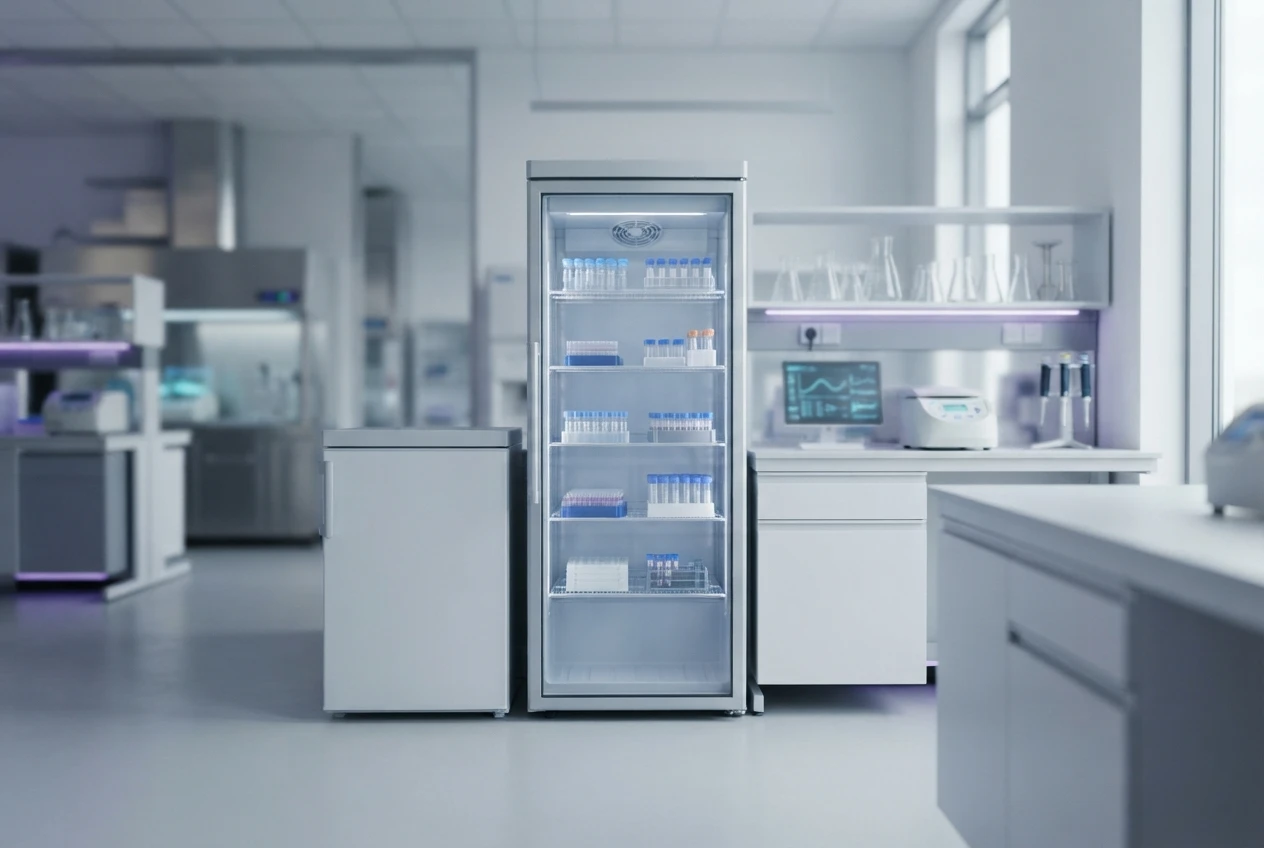
Why Reliable Laboratory Refrigeration Is Critical for Scientific Success
Why Reliable Laboratory Refrigeration Is Critical for Scientific Success
In the world of scientific research, precision is everything. Whether you are operating a clinical diagnostic wing, a pharmaceutical R&D facility, or an academic lab, the integrity of your work often hinges on a single factor: temperature stability.
Maintaining the correct storage environment for biological samples and chemical reagents is not just a best practice — it is a foundational requirement. In this guide, we explore why medical-grade refrigeration is non-negotiable for modern labs and how to choose the right equipment to protect your life's work.
1. Laboratory vs. Domestic Refrigeration: What's the Difference?
It can be tempting to opt for a standard consumer refrigerator to save on costs, but the stakes in a laboratory setting are far higher than in a kitchen. Laboratory-grade refrigerators and freezers are engineered for high-performance environments.
Unlike domestic units, which experience significant "hot spots" and temperature swings during defrost cycles, specialized lab units offer:
- Microprocessor Controls: Precise temperature stability, often within ±1°C.
- Forced-Air Circulation: Heavy-duty, constant airflow to rapidly recover temperatures after frequent door openings.
- Rapid Recovery: The ability to return to the set temperature quickly after the door has been opened.
2. The High Cost of Temperature Fluctuations
When temperature control fails, the consequences are more than just a minor inconvenience — they are often catastrophic.
- Biological Integrity: Enzymes and proteins can denature, rendering months of research useless.
- Vaccine Efficacy: Sensitive pharmaceuticals can lose potency if exposed to even brief spikes in heat.
- Chemical Stability: Volatile reagents may become reactive or lose their effectiveness if storage conditions vary.
Modern units from Legacy Lab Supplies feature integrated alarm systems and data logging, providing a digital paper trail for compliance and peace of mind.
3. Finding Your Perfect Match: Refrigerator or Combo Unit?
Selecting the right footprint and functionality is key to optimizing your lab's workflow. Consider these essential factors:
- Temperature Range Requirements: Do you need standard refrigeration (+2°C to +8°C), laboratory freezers (−25°C), or Ultra-Low Temperature (ULT) storage (−86°C)?
- Space Optimization: If floor space is at a premium, a fridge-freezer combo unit provides dual-temperature zones within a single footprint.
- Compliance & Certification: Ensure your unit meets necessary standards, such as ISO, CE, or FDA requirements for regulated environments.
4. Protecting Your Investment: Maintenance Tips
A laboratory refrigerator is a long-term investment. To ensure longevity and "audit-ready" performance, follow these maintenance essentials:
- Seal Inspection: Regularly check door gaskets for cracks or frost buildup to prevent ambient air leaks.
- Coil Cleaning: Vacuum condenser coils every quarter to maintain cooling efficiency and reduce energy costs.
- Annual Calibration: Have your temperature sensors calibrated by a professional annually to ensure the display matches the internal reality.
5. Why Choose Legacy Lab Supplies?
At Legacy Lab Supplies, we don't just sell equipment; we provide the infrastructure for your success. Our curated selection of medical and laboratory refrigeration is built for durability, accuracy, and continuous operation. We back every unit with expert support and comprehensive warranties, ensuring that your focus remains on your research, not your hardware. Explore our cold storage range to get started.