
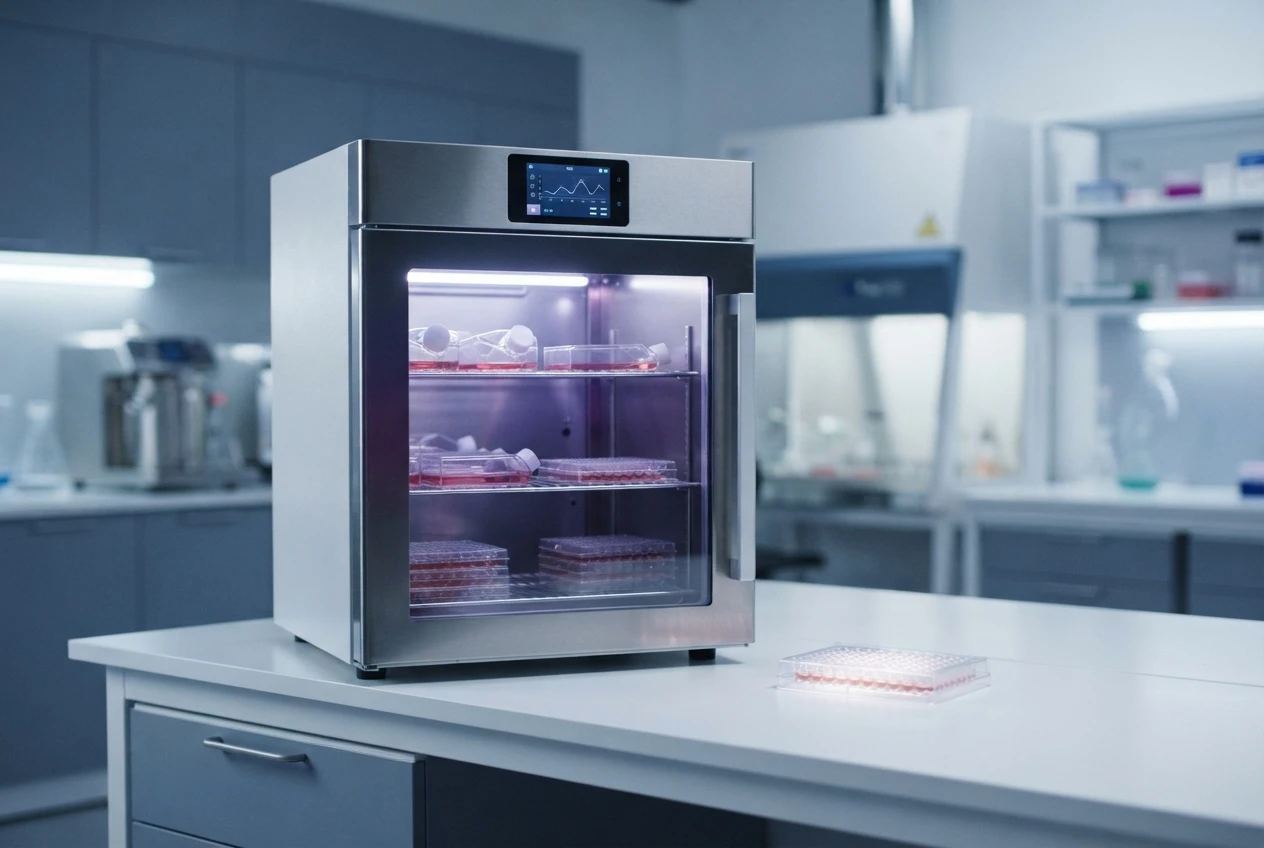
Choosing a CO₂ Incubator: Jacket Types, Contamination Control, and What Matters
Choosing a CO₂ Incubator: Jacket Types, Contamination Control, and What Matters
A CO₂ incubator has one job: hold a stable, sterile environment so your cell cultures thrive. But not all incubators protect that environment equally. Whether you are outfitting a new tissue-culture room or replacing an aging unit, these are the factors that separate a reliable incubator from a contamination risk.
1. Temperature Uniformity and Recovery
Cells are unforgiving of temperature swings. The two questions that matter most are how uniform the temperature is across the chamber, and how fast it recovers to 37 °C after the door opens. This is where the heating design comes in:
- Water-jacketed incubators surround the chamber with a layer of water, giving excellent temperature stability and holding temperature longer during a power interruption — at the cost of more weight and slower initial warm-up.
- Air-jacketed (direct-heat) incubators heat faster, recover more quickly after door openings, and are lighter — a strong fit for high-traffic labs.
2. CO₂ Control and Sensors
Stable CO₂ (typically 5%) maintains the pH of bicarbonate-buffered media. Two sensor types dominate:
- TC (thermal conductivity) sensors are economical and reliable but are sensitive to humidity and temperature changes, so they recover more slowly after door openings.
- IR (infrared) sensors are unaffected by humidity, recover quickly, and are the better choice for frequently accessed incubators.
3. Contamination Control — the Deciding Factor
Contamination is the single biggest reason cultures are lost, and it is where incubators most differ. Look for a combination of:
- Antimicrobial interiors — copper or copper-alloy chambers actively suppress microbial growth on surfaces.
- HEPA filtration that continuously cleans the in-chamber air.
- High-temperature sterilization cycles that decontaminate the whole chamber between runs without manual disassembly.
- Seamless, rounded interiors with removable shelving that leave nowhere for contaminants to hide.
4. Humidity and Practical Extras
Adequate humidity prevents media evaporation and osmolarity shifts during long cultures. A generous water reservoir or active humidity system helps. Also weigh capacity against your throughput, whether you need inner glass doors to preserve conditions during inspection, and access ports for in-chamber monitoring.
Matching the Incubator to Your Work
A low-traffic research incubator has different priorities than a shared core-facility unit opened dozens of times a day. Define your access frequency, contamination tolerance, and culture sensitivity first, then choose the jacket type, sensor, and decontamination features that fit. Explore our life science equipment and thermal processing ranges, or request a quote for help specifying the right incubator.