
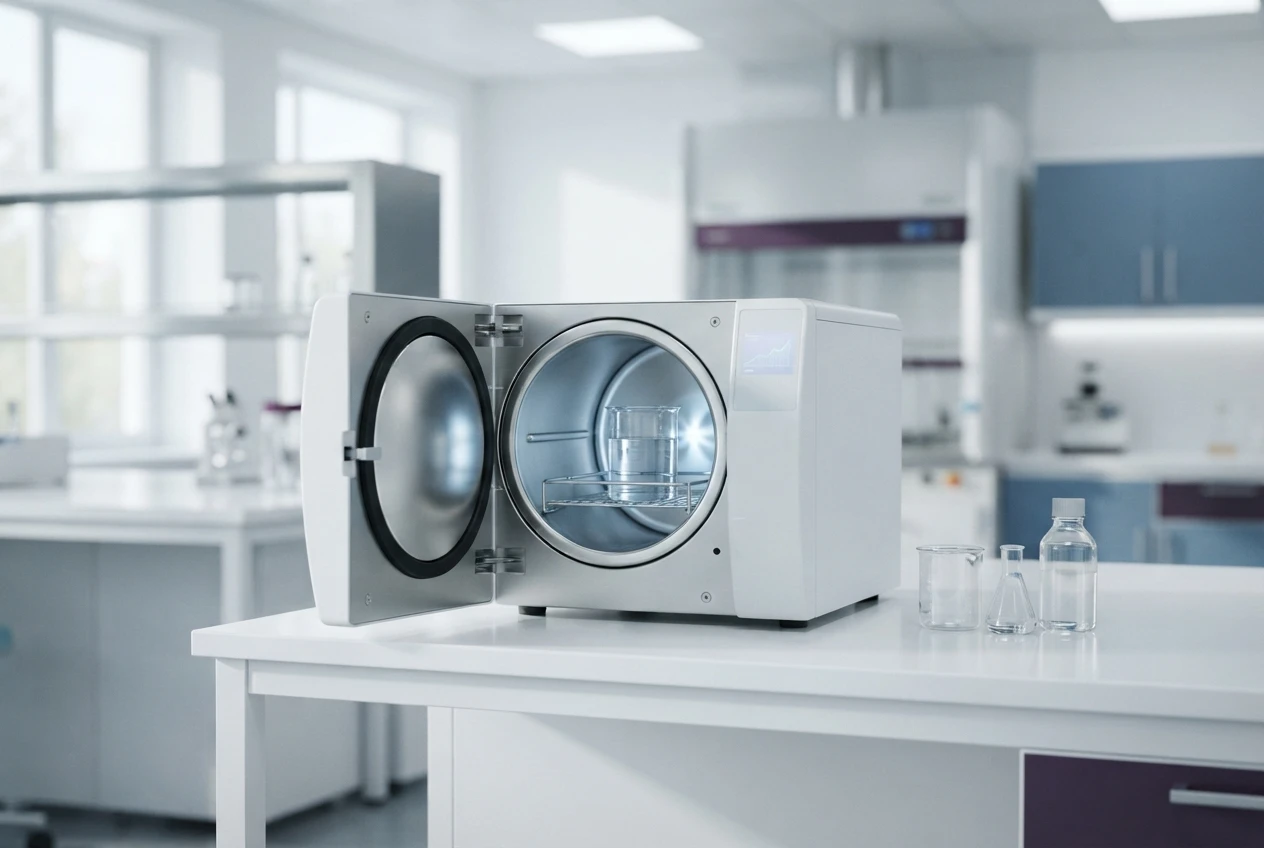
Autoclave Buying Guide: Gravity vs Pre-Vacuum, Chamber Size, and Cycles
Autoclave Buying Guide: Gravity vs Pre-Vacuum, Chamber Size, and Cycles
An autoclave sterilizes by exposing a load to saturated steam under pressure long enough to kill microorganisms. That only works if steam actually reaches every surface — which is why the biggest decision when buying a steam sterilizer is how it removes air from the chamber. Trapped air blocks steam and leaves cold pockets where sterilization fails silently. This guide walks through the choices that matter: air-removal method, chamber size, and cycle selection.
1. Gravity-Displacement vs Pre-Vacuum — The Core Distinction
Air is heavier than steam, and how the autoclave gets it out of the chamber defines the two main types:
- Gravity-displacement (gravity) sterilizers admit steam at the top and let it push the denser air down and out through a drain. They are simpler and well suited to unwrapped goods, liquids, and non-porous items where steam can reach every surface easily.
- Pre-vacuum (high-vacuum) sterilizers use a pump to actively evacuate air before steam enters, so steam penetrates wrapped packs, porous loads, and hollow instruments far more reliably. If you sterilize wrapped goods or complex geometries, pre-vacuum is the more dependable choice.
The rule of thumb: the more a load can trap air — wrapped, porous, or hollow — the more you benefit from vacuum-assisted air removal.
2. Liquids Cycles Are Different — and Non-Negotiable
Sterilizing media, buffers, and other liquids requires a dedicated liquids cycle with a slow, controlled exhaust. Depressurizing a hot liquid load too quickly causes it to boil over or the containers to shatter, because the liquid is above its normal boiling point when the pressure drops. Never run liquids on a fast-exhaust cycle designed for dry goods. If you sterilize media, confirm the unit offers a proper slow-exhaust liquids cycle and that containers are vented and only partially filled.
3. Sizing the Chamber
Chamber capacity should follow your real load, not a headline number:
- Benchtop autoclaves suit smaller clinics and labs sterilizing instruments and modest media volumes.
- Floor-standing / large-capacity autoclaves handle high throughput, tall vessels, and bulk glassware.
- Measure your tallest and widest items (flasks, bottles, pipette boxes) and confirm they fit the usable chamber, not just the nominal volume — usable space is always less than the raw dimensions.
4. Cycle Types and Controls
A good sterilizer offers a set of validated cycles matched to load types — unwrapped goods, wrapped goods, and liquids at minimum — plus configurable time and temperature. Look for:
- Programmable cycles so routine loads run consistently at the push of a button.
- Cycle documentation — printouts or data logging — for records and quality systems.
- Safety interlocks that prevent opening a pressurized chamber.
5. Verify Sterility — Don't Assume It
Reaching temperature is not the same as achieving sterility. Best practice combines three checks:
- Physical monitoring — the cycle's own temperature, pressure, and time records.
- Chemical indicators that change color when exposure conditions are met.
- Biological indicators using resistant spores to confirm the process actually kills microorganisms.
Build routine indicator testing into your workflow regardless of which autoclave you choose.
6. Loading Practices That Make or Break a Cycle
Even the right autoclave fails if the load blocks steam. Sterilization depends on steam contacting every surface, so how you pack the chamber matters as much as the cycle you select:
- Do not overfill. Leave space between items and around the chamber walls so steam can circulate freely; a tightly packed chamber traps air and leaves cold, unsterilized pockets.
- Position for drainage and penetration. Angle containers and trays so air can escape and condensate can drain rather than pool.
- Do not seal containers tightly. Caps must be loosened and vessels only partially filled so pressure equalizes and steam can enter.
- Keep loads consistent. Standardizing how you pack a given load type makes cycle results repeatable and easier to validate.
7. Waste, Materials, and Safety Considerations
Two practical points often decide which sterilizer suits a lab. First, if you decontaminate biohazardous waste, confirm the unit and cycle are appropriate for that load — waste bags behave very differently from clean instruments and can trap air readily. Second, not everything tolerates steam: some plastics deform, and certain materials and electronics are not autoclavable at all, so confirm your items are rated for steam sterilization before assuming the autoclave is the right route. On the safety side, a steam sterilizer is a pressure vessel operating with scalding steam — door interlocks, proper personal protective equipment when unloading, and letting pressure fully release before opening are non-negotiable, and units benefit from regular preventive maintenance to keep gaskets, valves, and controls reliable.
Choosing the Right Sterilizer
Start from your load: unwrapped instruments and liquids point toward a gravity sterilizer with a proper liquids cycle; wrapped, porous, or hollow items point toward pre-vacuum. Size the chamber to your tallest real items and your throughput, load it so steam can reach everything, and commit to indicator-based verification. Explore our thermal processing equipment, see the thermal processing buying guide, or request a quote for help matching a sterilizer to your loads.